Coalition for Smarter Growth
  • DC
    • Pro-DC
    • Zoning Update
    • Affordable Housing
  • Maryland
    • Get Maryland Moving
    • Purple Line
    • Montgomery County
    • Prince George’s County
  • Virginia
    • Outer Beltway
    • Transportation Reform
    • Alexandria
    • Arlington
    • Fairfax & Falls Church
    • Loudoun
    • Prince William
  • Region
    • Next Generation of Transit
    • Inclusive Communities & Affordable Housing
  • Tours, Forums & Events
  • Resources
    • Email Alerts
    • Testimony
    • Reports
    • Fact sheets
    • Presentations
    • Event materials
    • News & Press Releases
  • About
    • Mission
    • Annual Report & Financial Information
    • Contact & Staff
    • Champions Council
    • Work With Us
    • Allies
    • Donate
Home › Maryland › Prince George’s County

Prince George’s County

With 15 Metro stations, 8 MARC commuter rail station, parks, rivers, and farmland, and its older urban communities adjacent to the job center of D.C., Prince George’s is a place of great potential.

We work with public officials and community leaders to support economic development through well-designed, mixed-use, transit-oriented development, which will build the county’s tax and employment base, and provide increased retail and housing choices.


Regional Medical Center

County Executive Rushern Baker has made transit-oriented development a top priority in Prince George’s, and with the input and approval of the Council, created a $50 million Economic Development Incentive Fund focused primarily on transit-oriented development and inside-the-Beltway investment.

Plans are now afoot for a new Regional Medical Center. We have led a campaign to locate the new center at one of the county’s 15 underdeveloped Metro stations.

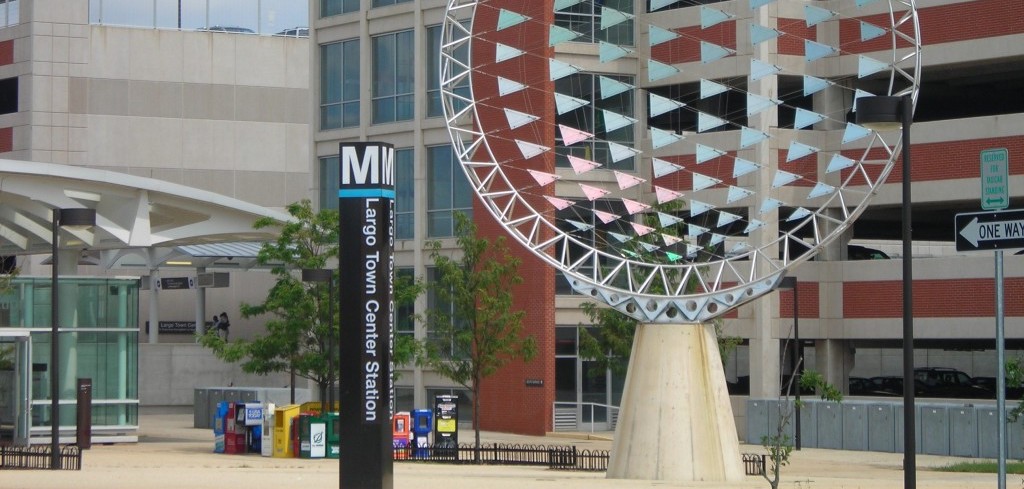
Of many potential sites, the Largo Town Center Metro station stands out as a location that would catalyze competitive transit-oriented development and serve as a dynamic center for the county, perhaps someday even incorporating the seat of county government.  A Metro station location like Largo would improve access to jobs and healthcare for all Prince George’s residents and lure back the majority of Prince George’s residents who currently leave the county for medical services. But we are concerned that hospital decision makers are holding on to old suburban development models and are looking for sites that would consume acres of land in low-slung buildings surrounded by parking lots in a completely auto-dependent environment.

We’re working to educate county and state decision makers on the practicality and many benefits of locating the Regional Medical Center at a Metro station.

Case Studies

hospital case studies coverWe have released a series of case studies highlighting the importance of urban design, community connections, and transit access to a successful medical center project. The hospital design examples are from leading national and international architectural firms, including AECOM, Cannon Designs, ZGF, and Smithgroup JJR. We thank AIA Potomac Valley and the Envision Prince George’s Community Action Team for Transit-Oriented Development for their partnership in making these case studies possible.

  • Learn more
  • Read the case studies

Get Involved

  • Sign up for our email alerts to learn more about this issue
  • Read more about the Regional Medical Center on Greater Greater Washington
  • Take action! Sign the petition in support of placing the Regional Medical Center at Largo Town Center Metro station.

TOP

Transit-Oriented Economic Development

View our Invest Prince George’s investors’ resource

Despite its assets and relatively high household incomes, development around Prince George’s Metro stations has lagged. Most regional job growth occurs on the western side of the region in western D.C., Arlington, Fairfax and Montgomery. This imbalance causes Prince George’s County workers to endure some of the longest commutes in the region. If if we used incentives to encourage more jobs to locate on the east side of the region and employers committed to putting jobs near transit, traffic congestion could be dramatically cut. More Prince George’s residents would enjoy the benefits of regional access offered by the county’s Metro stations and moderately-priced housing stock. The region as a whole would benefit from reduced traffic and pollution, and a more efficient use of regional transportation capacity.

Envision Prince George’s Community Action Team for Transit-Oriented Development

We work closely with the Envision Prince George’s Community Action Team for Transit-Oriented Development on periodic educational events focused on the opportunities and challenges facing Prince George’s County.

Invest Prince George’s

This document demonstrates the opportunities for development around each of Prince George’s County’s 15 Metrorail stations.  It offers a wealth of information for investors seeking access to the strong Washington, D.C. market by capitalizing on the region’s most strategic, yet undervalued sites.

Go to Invest Prince George’s

TOP

Equitable Development in Langley Park

Langley Park is a vibrant multi-cultural community that could greatly benefit from Purple Line stations – the planned inner urban ligth rail line. The area is currently served extensively by Metrobus and county bus services, and ridership is high: close to half of area workers carpool to their jobs, and more than a quarter ride public transit. More than a third of households do not own a car. Langley Park has household incomes thirty-eight percent lower than the rest of Prince George’s County. It’s a strong immigrant communtiy, with half of residents born outside of the United States. Latin Americans make up the vast majority of that half, at over eighty percent.

A high quality light rail investment will strengthen property values and business opportunities.  However, with this promise also comes challenges. We are pressing the state and local governments to implement zoning, housing, economic assistance, and other policies to ensure low wage workers, renters and small businesses have the opportunity to stay in communities to be served by the Purple Line.

We are working to ensure that the County supports housing preservation, and assists renters and small businesses, so that everyone can benefit from the Purple Line, and we are asking the State of Maryland to set aside funds to assist the county in this effort.

TOP

PGplaza
twitter facebook flickr rss
  • Home
  • Privacy
  • Site Map
  • Email Archive
  • Events
  • Actions
  • Donate
COALITION FOR SMARTER GROWTH | 316 F STREET NE | SUITE 200 | WASHINGTON, DC 20002 | (202) 675 - 0016

Site © 2013 Coalition for Smarter Growth . All rights reserved. ↑