Loudoun County
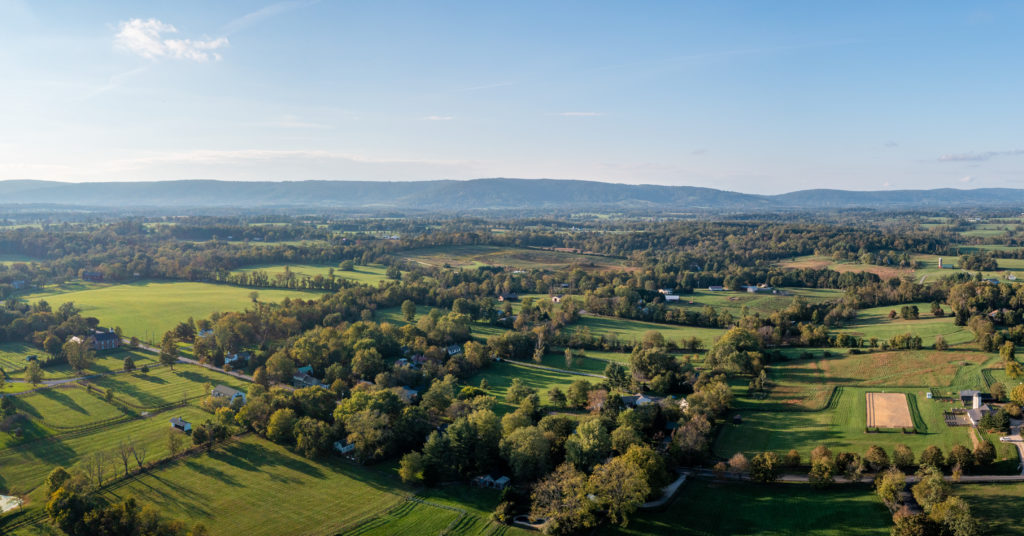
A mixture of suburban communities and rural, historic farmland, Loudoun County has experienced extraordinary growth over the past decades, making it a hot spot for tension about development. Too much land was planned for development as far back as the 1970s and 80s, meaning much of the development today — especially office/commercial — has been scattered and is wholly dependent on automobile access. Large arterial roads, instead of well-interconnected local streets, mean heavy traffic backups on the few arterials available.
Prince William County
Prince William County has experienced rapid growth in recent years and the resulting sprawl development has caused significant traffic and infrastructure problems. CSG continues to work with dedicated Prince William residents to stop the wasteful and unnecessary Outer Beltway and an eastern Potomac bridge crossing that threaten remaining farms, forests, and historic sites.
Improving transit in the I-95 and I-66 corridors, including the expansion of Virginia Railway Express (VRE) and expanded commuter bus service should be a priority to help existing commuters. At the same time, revitalization of aging commercial corridors like Route 28 in Manassas Park, Route 234 in Manassas, and Route 1 in eastern Prince William offer great potential to create competitive, mixed-use communities. The redevelopment of Woodbridge at the gateway to Prince William County next to the Woodbridge VRE Station, the Occoquan River, Route 1 and I-95 seems to offer the best opportunity to create a vibrant, competitive, transit-oriented center in the county.
Our Work in Montgomery County, MD
Fighting the Outer Beltway
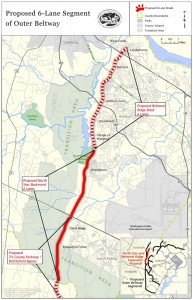
One of the longest-standing fights in Loudoun and Prince William has been over the proposed Outer Beltway (once known as the Western Transportation Corridor) running generally along the path of Route 659 (Gum Springs Road/Belmont Ridge Road) for the Loudoun portion. Originating at I-95 in Prince William and taking historic battlefield land at Manassas, the highway would cross into Loudoun and extend to Route 7.
For years, boosters have also proposed at least two bridge crossings into Montgomery County — one at Route 28 and another connecting to the extension of Route 659. Much of the push for the highway comes from those who propose to turn Dulles Airport into the East Coast’s largest air freight distribution center, despite the impact of thousands of trucks, hundreds of acres of distribution centers, and hundreds more cargo flights. The Outer Beltway would not address the need to improve east-west commuter routes and would in fact spark more development and more traffic that would feed into the existing east-west commuter routes.
Preserving the Rural Crescent
Conservation is at risk in Prince WIlliam County as the county presses to allow industrial development in the Rural Crescent adjacent to Manassas National Battlefield Park and Prince William Forest National Park. Along with our partners at Prince William Conservation Alliance, the Piedmont Environmental Council, and others, we’re working to make real a vision for Prince William County that values National Parks, farmland and forests, clean drinking water, housing diversity, and attractive, sustainable communities for everyone.