
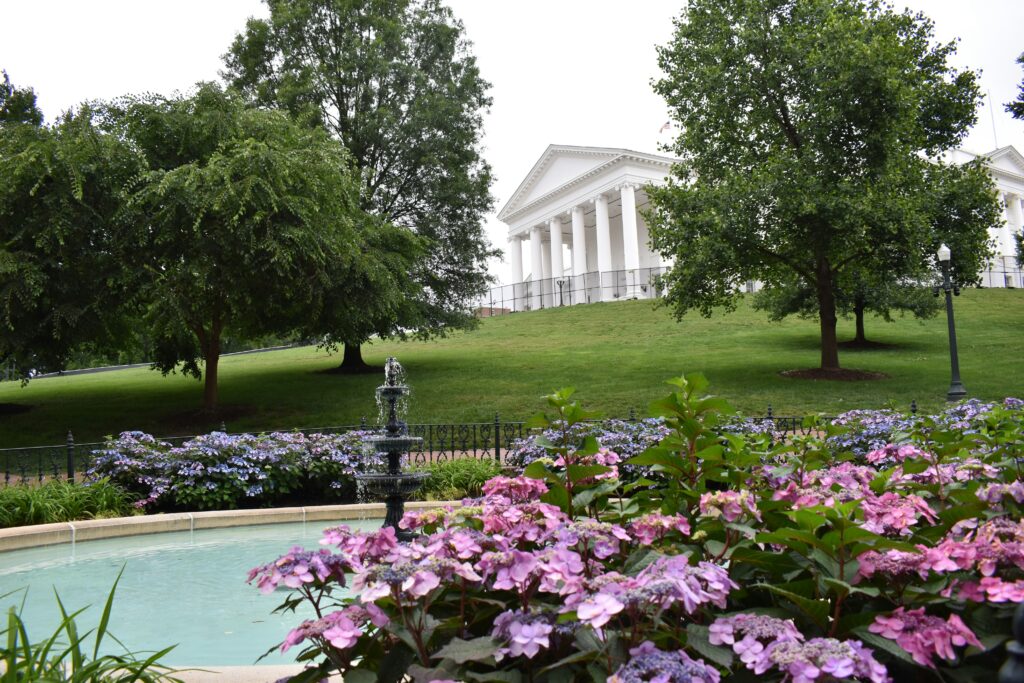
Virginia state capitol in Richmond by Kellie Shannon on Unsplash
Virginia’s 60-day General Assembly kicked off yesterday! With a new Governor and many new faces following this fall’s election, legislators appear more energized than ever to address Virginia’s interconnected housing and transportation challenges.
A top theme of this year’s General Assembly is affordability, and we will be tracking bills on land use and housing, transit funding, and bicycle/pedestrian safety to support smart growth outcomes and curb the sprawling, auto-dependent land use that is driving up costs throughout the state. Separately, partner groups are fighting for lower home energy costs by ensuring data centers pay for the costs of their energy service, and allow expansion of distributed energy and storage (ex. home solar and battery).
Here are some of the key bills we’re keeping our eye on:
Transportation
- Transit funding – A top priority this year is winning additional funding for transit, including for Metro, local bus, and Virginia Railway Express. A General Assembly committee identified $406 million in additional needs in Northern Virginia, and transit agencies elsewhere in Virginia need about $100 million more.
- Bicyclist safety – The Omnibus Bicyclist Safety bill (HB661) allows people biking to yield at stop signs under limited conditions, to proceed on the walk signal when traveling straight or turning right (while yielding to pedestrians), and clarifies when they may ride two abreast. In turn, HB812 clarifies the requirement to obey bicycle traffic signals at intersections.
Housing
- Affordable dwelling unit ordinances (SB74) – authorizes all localities to amend their zoning ordinances to create affordable dwelling unit programs that provide optional increases in density for moderately-priced housing.
- Right of First Refusal (HB4) – preserves affordable housing by enabling localities to establish a Right of First Refusal and purchase subsidized multifamily rentals whose committed affordable status is at risk of expiring.
- Accessory Dwelling Units (ADUs) (HB611) – legalizes ADUs, also known as granny flats or backyard cottages, in areas zoned for single-family residential use statewide.
- Parking Reform (HB262) – eliminates parking minimum requirements to make housing more affordable, leaving it to the private market to determine parking space needs for their units. Local governments may still set parking maximums.
- Expediting Affordable Housing (HB594) – allows localities to create an administrative process to approve rezoning applications for affordable housing developments in suitable locations.
- Faith in Housing (HB1279) – enables faith institutions and other property tax-exempt non-profits to build income-restricted, affordable homes “by-right” on land they own.
- Housing Near Jobs – allows multi-family homes to be approved administratively by local governments in commercial zones, provided they meet other applicable zoning requirements.
- Split Land Value Tax (HB10) – allows localities to set different tax rates for land and for improvements (including housing) on that land. Increasing the rate on land but lowering it on buildings supports infill development and housing production.
- Virginia Housing Trust Fund – increases the Virginia Housing Trust Fund to $400M over two years to expand the supply of affordable homes and support housing stability for low-income households.
Note: not all bill numbers available yet
Stay tuned for CSG action alerts on how you can support these priorities and other good bills!