
Montgomery County Council approves the University Boulevard Corridor Plan 7-3!
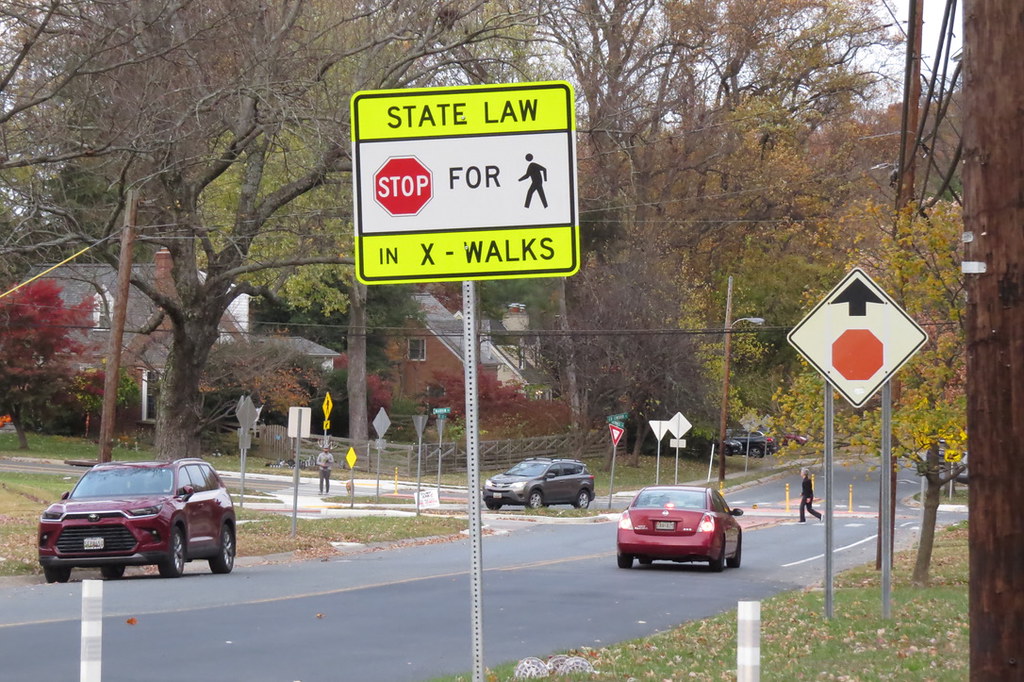
On Tuesday, December 9, 2025, the Montgomery County Council voted to approve the University Boulevard Corridor Plan by a vote of 7-3! 🎉
Councilmembers Balcombe, Fani-González, Friedson, Glass, Luedtke, Sayles, and Stewart voted for the plan. Councilmembers Jawando, Katz, and Mink voted against the plan.
The University Boulevard Corridor Plan creates a strong framework for safer streets, a wider variety of housing options, a connected bike network, and new homes and retail near transit.
We are grateful to all those who spoke up in support; to the Planning staff and Planning Board for their hard work, community engagement, and vision; and to the Councilmembers who supported the plan and stood by the county’s commitments to safer streets and more inclusive, sustainable ways to grow.
What are the plan’s key recommendations?
Recommendations in the plan approved by the Council include:
- Re-zoning to allow mixed use (commercial and residential uses) for many institutional and commercial properties in the plan area, which will create new opportunities for housing and retail, and provide pedestrian safety improvements as sites are redeveloped
- Allowing missing middle housing options on 170+ properties abutting University Blvd that are currently zoned for single-family detached homes only
- Wider, well-buffered sidewalks on University Boulevard in Four Corners
- More frequent crosswalks on University Boulevard with better lighting and visibility for drivers and pedestrians
- A complete network of connected low-stress bicycle facilities, including a trail connection across I-495 connecting Colesville Road to Indian Spring Terrace Local Park and Marshall Avenue
Your voice in support of this plan truly made a difference and got these visionary recommendations across the finish line. From letters to the editor, to conversations with neighbors, to testifying at public hearings and contacting the County Council, you spoke up and advocated for a more inclusive, walkable, and sustainable community.
What happens next?
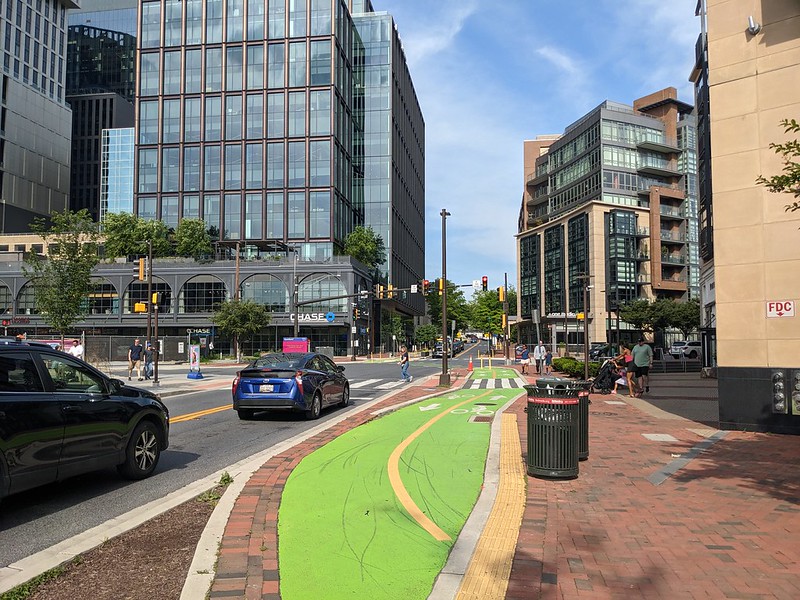
Master plans provide essential scaffolding for meaningful, tangible change. For example, downtown Bethesda’s growing network of separated bike lanes is a result of recommendations made in the 2017 Bethesda Downtown Sector Plan and 2018 Bicycle Master Plan.
In the future, transformative changes like this will be possible in the University Boulevard Corridor Plan area, all because you called on the Council during this critical window of time to advance a plan with a bold and substantive long-term vision for your community—and you succeeded.
CSG will continue to advocate for the recommendations of the University Boulevard Corridor Plan to be implemented in the years to come in order to provide truly safe places for people to bike and walk, a wider variety of housing options, and top-notch transit service.
Photo credit: Carrie Kisicki (at top); Graham Reid (Bethesda cycletrack)