
On February 4th, 2021, CSG cosponsored a Transit Equity Day Lunch and Learn Panel Discussion with the Sierra Club Virginia chapter. If you missed the event, or are looking for event materials, you can view the video of the event here and see the slide deck here.
Category: Resources

RELEASE: Diverse group of housing supporters urges Chairman Mendelson & DC Council to pass the DC Comp Plan

Today, the Housing Priorities Coalition and allies urged the DC Council to pass the DC Comprehensive Plan Amendment Act. The letter cited the Comp Plan update as one of our most critical tools to address housing affordability, racial equity and a number of other challenges. The proposed legislation has been waiting for DC Council action since the Mayor submitted it in April 2020.
The Housing Priorities Coalition formed four years ago to help update the DC Comprehensive Plan, the land use policy that guides development decisions in the District. Learn more here.
CSG Testimony to County Council in support of ZTA 20-07 and Bill 52-20
February 8, 2021
Montgomery County Council
Stella Werner Council Office Building
100 Maryland Ave
Rockville, MD 20850
Zoning Text Amendment 20-07, R-60 Zone – Uses and Standards (Support) and Bill 52-20, Landlord-Tenant Relations – Protection Against Rent Gouging Near Transit (Support with Amendments)
Testimony for February 11, 2021
Jane Lyons, Maryland Advocacy Manager
Council President Hucker and councilmembers, thank you for the opportunity to provide testimony on both ZTA 20-07 and Bill 52-20. My name is Jane Lyons and these comments are on behalf of the Coalition for Smarter Growth, the leading organization in the D.C. region advocating for walkable, bikeable, inclusive, transit-oriented communities as the most sustainable and equitable way for the DC region to grow and provide opportunities for all.
Montgomery County has a housing crisis, a crisis that stretches from those with the lowest incomes to even those of upper-moderate incomes. There are too many people who spend over half their income to keep a roof over their and their loved ones’ heads, and fear that next year’s rent increase will force them to find a new home. There are also too many people who feel that they cannot comfortably age-in-place in the communities they’ve called home for decades and too many young families who find it impossible to put down roots.
Montgomery County is a great place to live, which is why so many people want to be here, but we do not have enough housing to meet the high and growing demand, especially in walkable, transit oriented neighborhoods. Wealthier households are able to out-bid others, pushing teachers, healthcare workers, and other essential workers to farther and farther out, undermining our economy and increasing greenhouse gas emissions.
There is no easy answer to solve our housing challenges, but the two proposals before you this evening are a step in the right direction. Neither proposal is perfect, but both are the beginning of critical conversations about making sure the county’s housing opportunities are more inclusive, sustainable, and affordable.
First, ZTA 20-07: From various studies, reports, and plans over the past several years, missing middle housing typologies such as duplexes and townhomes have emerged again and again as a
Coalition for Smarter Growth smartergrowth.net 202-675-0016
key tool that we continue to constrict. Building duplexes, triplexes, and small apartment buildings near transit needs to be much less onerous. To do this, they need to be allowed by-right with appropriate requirements, although those requirements must ensure that middle housing types are actually feasible to construct.
We would also like to see this initiative expanded to include both R-60 and R-90 zones near Metro, Purple Line, and along major transit corridors. However, targeting zoning reform only around transit does not undo the legacy of inequitable land use policies and segregation. We encourage zoning initiatives such as this to also enable a diversity of housing options in areas of high incomes and job clusters. To that end, we also urge you to consider creative approaches for incentivizing affordability in middle housing developments.
Secondly, Bill 52-20: We support legislation to restrict rent gouging, but such legislation must be carefully crafted to make sure that rent controls do not result in a reduction in new housing or disinvestment in existing housing. To achieve a more balanced policy, we propose the following amendments:
1. Set the rate of allowed increase to three percent plus the rate of inflation. The voluntary rent guidelines, while useful, are essentially just the rate of inflation – the most restrictive type of rent control policy. The cost of labor, construction, and climate change mitigation/adaptation measures are often rising faster than the rate of inflation.
2. Apply the provision countywide so that all renters are protected and transit-oriented development is not disincentivized.
3. Increase the exemption period for new buildings to 15 years. Properties need to produce the highest rate of return for the first 10-17 years in order to pay off construction loans. Without an expanded exemption period, new construction is unlikely.
4. Consider different treatment for small multi-family buildings (10 to 50 units) and exempt buildings less than 10 units. Smaller buildings often have a more difficult time with capital maintenance because financing costs are typically higher due to a lack of economies of scale.
5. Exempt already rent regulated units until that regulation expires. For example, overlaying another rent regulation on top of existing ones could discourage Low Income Housing Tax Credit (LIHTC) investments, resulting in lost lower-priced units.
In conclusion, we urge you to take up the complementary issues of rent stabilization and missing middle housing to help Montgomery County become more affordable, equitable, and sustainable. Thank you for your consideration.
How we’re building a more equitable and sustainable region
February has arrived, and the CSG team is continuing to incorporate equity into our work. We spent the past week tuning in to Smart Growth America’s Equity Summit, which featured great speakers and leaders from across the smart growth and urbanism community, and we’re excited to continue building a more equitable smart growth movement for a more equitable and inclusive DC region. Be sure to check out the videos and recommended reading from the Summit when available!
Transit Equity Day
Transit Equity Day is this Thursday, February 4, celebrated on Rosa Parks’ birthday! We’re joining advocates across the U.S. and DC region to highlight both the progress and challenges in achieving equity through better, more accessible transit.
We’re co-sponsoring the national Labor Network for Sustainability’s Transit Equity Day with virtual public hearings on February 3 and 4.
In VA, we’re co-hosting with the Sierra Club – Virginia Chapter a lunch and learn panel on February 4 at 12pm, featuring transit champions from NoVA, Richmond, Charlottesville, and Hampton Roads.
In DC, we’re cosponsoring #TranspoBINGO! The bingo card will be revealed at a virtual happy hour (RSVP here) on Feb 3rd at 8pm and the game will run Feb 4 to 11, with another virtual happy hour on Feb 11 at 6pm to announce winners. It’s a great chance to connect with fellow transit advocates! Tweet your progress using #TranspoBINGO. Learn more here.
Virginia
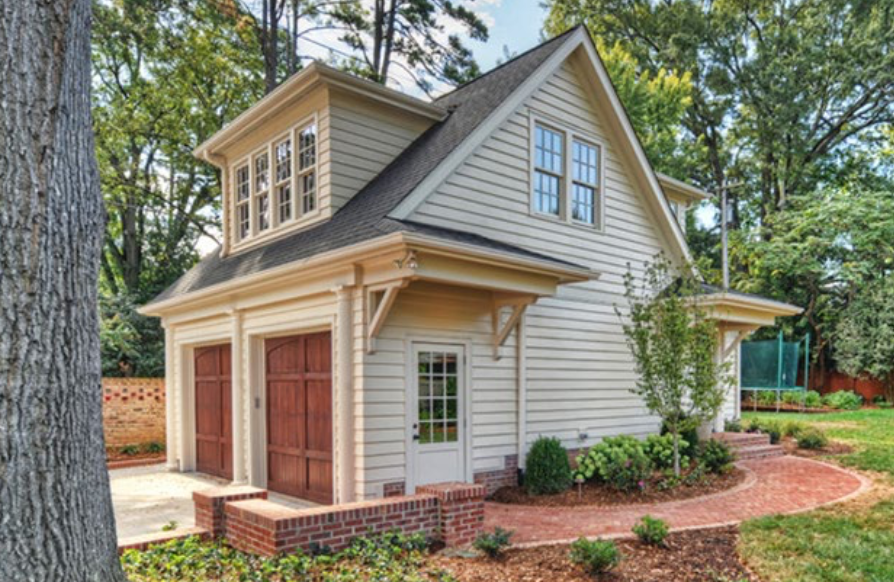
Speaking of transit, Fairfax County continues public outreach for their Transit Strategic Plan, which is a county-wide review of bus service and a plan for future service. You can provide input here until February 19.
Meanwhile, Sonya is working across NoVA organizing and speaking up in support of inclusive and sustainable housing policies. Thanks to Alexandria residents and CSG supporters, the city passed a strong new accessory dwelling unit policy by a 6-1 vote last week! In Fairfax, Stewart and Sonya provided testimony to the Planning Commission in support of the county’s Workforce Dwelling Unit policy update and their zoning modernization (zMOD) updates to accessory living units. Both will go before the Board of Supervisors and needs your support. Arlington County extended the survey deadline to provide input on their Missing Middle Housing study to Feb 8, so there’s still time to support missing middle housing by filling out the survey!
Maryland
Missing middle housing is also up for consideration in Montgomery County! The county is discussing missing middle as part of their Thrive2050 General Plan update, as well as Zoning Text Amendment (ZTA) 20-07. The ZTA would allow missing middle housing on lots zoned for single family houses within a mile of Metro stations. To learn more, check out last week’s Montgomery for All meeting, hosted by Jane, with experts Lisa Govoni and Eli Spevak. The Council will hold a public hearing on the ZTA on Feb 11, so join the waitlist to testify or submit written testimony here.
If you live in downtown Silver Spring, RSVP to a virtual meeting on Feb 9 at 7pm to learn more about the drafting of the Silver Spring Downtown and Adjacent Communities Plan, which will guide the area’s growth for the next 20 years.
DC
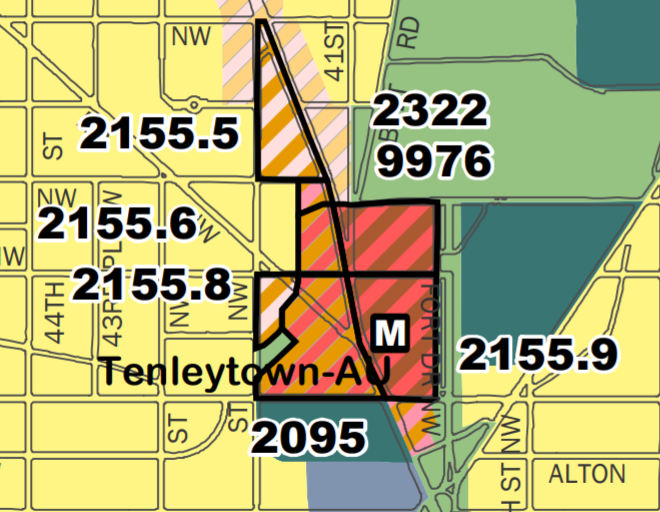
The fight continues for passage of the Comprehensive Plan! Cheryl is working with the Housing Priorities Coalition to organize support from DC residents, including submitting a sign-on letter from residents to urge passage. The updated plan removes exclusionary language, requires the use of a racial-equity lens when making decisions, increases affordable housing supply and sets goals for equitable distribution of housing opportunities. It would also allow construction of over 1,000 affordable homes stalled by the Comp Plan’s delay. Click here to send an email to Council!
Cheryl is also continuing to work on expanding DC’s inclusionary zoning (IZ) regulations, or IZ+, which would require additional affordable homes in developments resulting from upzoning. Stay tuned for our event on IZ+ later in February. And ICYMI, we released the long-awaited ADU DC Homeowner’s Manual: How to Build an Accessory Apartment or Second Dwelling in the District of Columbia with United Planning Organization and Citi.
Climate
Transportation is our #1 source of emissions, but officials aren’t doing enough to reduce the amount we have to drive. Thanks to Bill, we won a vote at the Transportation Planning Board to require projects to be prioritized to reduce vehicles miles traveled and greenhouse gas emissions. But we’re seeing delays by staff and aren’t convinced some jurisdictions will do their part to select transportation projects that reduce emissions, so we sent a joint sign-on letter to every local government. Multiple CSG staff are also providing input to local government climate action plans under development in Virginia and Maryland.
Want to volunteer for CSG?
.
We’ve recently received several inquiries from supporters who are interested in volunteering their time to support CSG’s advocacy. If that describes you, please fill out this form to let us know how you’d like to help. Two key projects — local photography and monitoring local government meetings.
Thanks for all you do,
Stewart, Cheryl, Jane, Sonya, Emily, and Bill
CSG Testimony in Support of PG 416-21: Finish the Countywide Rezoning
RE: Testimony in Support for PG 416-21: Prince George’s County – Public Ethics – Definition of Application
At the Virtual Delegation Bill Hearing on Local/Bi-County Legislation By The Prince George’s County House Delegation, February 2, 20201
By Cheryl Cort, Policy Director, Coalition for Smarter Growth
Dear Members of the Delegation:
Please accept these comments on behalf of the Coalition for Smarter Growth. The Coalition for Smarter Growth is the leading organization working locally in the Washington, DC metropolitan region dedicated to making the case for smart growth. Our mission is to promote walkable, inclusive, and transit-oriented communities, and the land use and transportation policies and investments needed to make those communities flourish.
We are pleased to provide testimony in support of PG 416-21. This bill provides a legislative adjustment needed to complete the Prince George’s County Zoning and Subdivision rewrite. A uniquely Prince George’s County ethics law has tripped up the Countywide Zoning Map Amendment (CMA), which is the last step in the zoning rewrite process. This ethics law doesn’t exist anywhere else in the state including in Montgomery County or Baltimore City which has already updated their zoning regulations.
The County’s zoning rewrite was adopted by the Prince George’s County Council in December 2018. After the late 2018 adoption, the Countywide Zoning Map Amendment (CMA) process was initiated. The CMA is the final stage where the rewritten zoning regulations are implemented by applying the new or updated zones to the County’s zoning map.
Over the course of a number of years, we worked with stakeholders and community activists to engage in the public process to update the county’s outmoded zoning and subdivision regulations. We have advocated for the adoption of the modernized regulations through various public fora, and hearings by the County Council.
We made this a priority because this zoning rewrite is a significant advance for the county. The zoning rewrite and CMA are worth the effort because they replace the county’s current obsolete and cumbersome zoning regulations which are holding back the county. Here are some of the ways the zoning and subdivision process will improve:
- Design and building form standards: the document establishes transit-oriented zones at the local and regional scales to support the goals of walkable urbanism, creating walkable, and bikable areas that are well-connected to transit;
- Parking standards for urban and transit-oriented areas: the zoning rewrite reduces excessive minimum parking requirements in transit-oriented centers in order to support more multimodal designs and uses.
- Street designs: the revisions require interconnected streets, shorter blocks, and pedestrian and bicycle infrastructure. It implements newly adopted urban street design standards that support walk and bike friendly streets.
- Transportation demand management: the regulations also establish progressive traffic reduction measures that emphasize encouraging more people to ride transit if available, bicycle, share rides and walk.
- Ease of use: The zoning and subdivision regulations are presented in a more readable format providing tables and graphic illustrations to better understand and visualize the standards.
- Ending perpetual approvals: The zoning rules establish limits on approvals after a number of years. Today, approvals are allowed to live on forever, despite significant changes that may occur after initially projected conditions. While some of the provisions seem overly generous, setting the proposed limits would be a big step forward for the county.
The proposed legislation is clear — this is specific to the CMA, not for everyday zoning and development review matters that come before the Council. For all these reasons, we urge the delegation to adopt the bill to accommodate the Council’s role and responsibility in adopting the CMA. We believe implementation of the zoning and subdivision rewrite is a tremendous improvement for the county and the community. It is a once in a generation opportunity.
Thank you for your consideration.
CSG Comments Re: zMOD
Read below for the Coalition for Smarter Growth’s testimony in support of the Accessory Living Unit provisions as part of zMOD.
RE: Support for Accessory Dwelling Units in Alexandria
January 23, 2021
Alexandria City Council
301 King Street
Alexandria, VA 22314
RE: Support for Accessory Dwelling Units in Alexandria
Dear Mayor Wilson and Members of City Council:
Please accept these comments on behalf of the Coalition for Smarter Growth (CSG), the leading organization in the DC region advocating for walkable, inclusive, transit-oriented communities. CSG appreciates the City of Alexandria’s efforts to develop an accessory dwelling unit (ADU) policy and writes to convey our full support of the proposal. CSG has become a leading expert on ADUs through our work in DC and our just-released DC ADU homeowners manual.
Accessory dwelling units can offer less expensive housing options than renting or buying a single-family home because of their smaller size. They are great for an aging parent you are caring for, offer a home for your recent college graduate, or a young professional just starting their career. ADUs can also offer a stream of income for homeowners, including lower-income homeowners and retirees on fixed incomes.
CSG is enthusiastic about the strong provisions being proposed that will help make the City’s program a success, such as allowing ADUs citywide, and enhance their feasibility and affordability by not requiring off street parking in our transit-rich, walkable city, and not requiring owner-occupancy on site.
An owner-occupancy requirement lacks flexibility for the homeowner and may limit one’s ability to build an ADU. It can make it difficult for homeowners to finance an ADU. This may serve to exacerbate income and racial inequities by limiting the ability of homeowners to construct ADUs to those with sufficient equity in their homes. An owner-occupancy requirement would also be limiting to people who must move on short notice, such as military and diplomatic families, who often choose to rent out their primary residence. We also note that single-family homes today are already frequently rented out by owners who are not living on site. The owner-occupancy requirement would be a barrier to constructing ADUs and undermine the goal of increasing the supply of ADUs in the city.
We encourage the city to include requirements for regular review, reporting, and recommendations by city staff on refinements to the program. This could include creating an affordability program for low-income renters or buyers, assessing size limitations and setbacks and their impact, whether or not the program has exacerbated or improved racial and income inequalities, and recommendations to address any other barriers towards creating new housing through ADUs.
We understand that some Alexandria residents who are opposed to ADUs and previously opposed the Seminary Road safety project have attacked CSG and our supporters as being outsiders. CSG is a longstanding, 24-year-old regional organization advocating for transit, safe streets, transit-oriented development, and affordable housing throughout the DMV and were honored with the Council of Governments’ (COG) Regional Partnership Award in 2017. Our staff live in Northern Virginia, Maryland, and DC and work with local advocates in each jurisdiction. We sent emails about the ADU program to our Alexandria members and subscribers encouraging them to participate in the ADU study process and to contact the City Council, and we remind our supporters that the emails on Alexandria issues are focused on Alexandria residents. At the same time, local elected officials meeting at COG have agreed that housing, like transportation, is a regional issue, requiring shared effort by every jurisdiction.
CSG believes the proposed ADU policy is a bold step forward in establishing a strong program that will help provide more housing options in Alexandria. Thank you for your time and consideration.
Sincerely,
Stewart Schwartz
Executive Director
Sonya Breehey
Northern Virginia Advocacy Manager