
We joined forces with the Maryland chapter of the Sierra Club and numerous other civic and neighborhood associations to fund a review of the draft environmental impact survey for the proposed expansion of I-495/I-270. Read the findings below.
Category: Resources

Support DC Expanded Inclusionary Zoning
The DC Zoning Commission will hear the proposal for Expanded Inclusionary Zoning on Nov. 16, 2020 at 6:30pm.
Read our testimony in support of Expanded IZ:
You can read our preliminary support in July 2020 for this proposal: CSG’s testimony here, and our joint support with Housing Priorities Coalition testimony. View Expanded IZ Case No. 20-02 Zoning Commission hearing notice and case documents here.
Sign up to testify at the 11/16/20 hearing, 6:30pm, Case Number 20-02 here.
RELEASE: CSG Joint Comments on Proposed Expansion of I-495/I-270
November 9, 2020
FOR IMMEDIATE RELEASE
Monday, November 9, 2020
Contact:
Lindsey Mendelson, Maryland Sierra Club, lindsey.mendelson@mdsierra.org, 240-706-7901
MARYLAND — Today, fifty groups came together to deliver one simple message: Governor Hogan’s plan to widen the I-495 and I-270 toll lanes is flawed, incomplete, legally vulnerable, and would fail to reduce congestion for the vast majority of drivers.
On behalf of the diverse coalition of groups, the Maryland Sierra Club and Rock Creek Conservancy released over 200 pages of technical and legal comments today, the final day of the 120-day public comment period for the project’s Draft Environmental Impact Statement (DEIS). According to the groups, “the state’s Draft Environmental Impact Statement violates the National Environmental Policy Act (NEPA), as well as other federal laws, and is a disservice to the public because it presents incomplete and inadequate analyses.”
The coalition comments are the result of work by Jill Grant & Associates, dozens of community experts, and three contracted consultants. They present a sophisticated legal analysis demonstrating a project that is not in the public interest, with countless unanswered questions, and would be extremely harmful for the environment and public health.
The comments include a new study by renowned traffic modeler Norm Marshall that shows expanding I-495 and I-270 will shift traffic into the peak hours and create or exacerbate bottlenecks at the ends of the toll lanes and on connecting roads. There would be no congestion improvements for the majority of drivers and no benefits for non-users of the toll lanes.
Meanwhile, the DEIS presents an incomplete and unclear estimate of capital costs and revenues and ignores significant financial costs the project would impose on Maryland communities. These costs include a direct subsidy to a private developer, costs of relocation of utilities, decreases in property values, and public-private partnership (P3) financial risks.
The comments describe the DEIS’s failure to adequately assess impacts to parkland, air and water quality, adjacent and environmental justice communities, and historic and cultural resources. The report also describes how the Maryland Department of Transportation refused to provide key information to the public–denying, delaying or charging the Sierra Club and other groups $300,000 for public information requests that would have shed more light on this project.
“Our analysis shows that Governor Hogan’s highway boondoggle will not solve congestion; instead, it will be a disaster for our climate and health and cause further harm to communities already impacted by environmental injustices. We must invest in equitable solutions that actually increase mobility and connectivity across the region. We are grateful for the groundswell of partner and community support in this major effort and thank everyone who has voiced their concerns about this flawed and harmful project.” –Josh Tulkin, Director, Maryland Sierra Club
“Rock Creek is a primary driver of quality of life in our region – for people and for our ecosystems. The state’s study offers few details for a plan to permanently remove land from the Rock Creek stream valley parks and make up for impacts to water quality with changes many miles away. Their plan strips local residents of quality of life benefits in favor of short-lived travel time benefits for drivers and at a great cost to the taxpayers of Maryland and to downstream communities. The P3 calls for innovative techniques, yet the state’s proposal represents a complete failure of imagination.” –Jeanne Braha, Executive Director, Rock Creek Conservancy
“The draft environmental impact statement does not consider any real alternatives to highway expansion and consistently fails to take a hard look at the environmental and health impacts of the project, as required by the National Environmental Policy Act. Because of the extensive failings of the statement, along with the many harms to air quality, water quality, parklands, and historical and cultural resources that the expansion would cause, the Maryland Department of Transportation and the Federal Highway Administration should not move forward with the project.” –Ian Fisher, Jill Grant & Associates
“The proposed expansion of the I-495 Beltway and I-270 is the wrong path for Maryland’s transportation networks – instead of decreasing congestion, it would only increase traffic and pollution and damage our neighborhoods and our environment. It’s time for our state to work with local communities on developing stronger solutions to our transportation challenges that are more sustainable for our environment and work better for our residents.” –Patrick L. Wojahn, Mayor, City of College Park, Maryland
“This study represents a failure to protect people and the environment. It fails to show how wildlife and wild places will be hurt by water pollution, air pollution, and forest loss. It fails to account for climate change by considering an alternative that relies on public transit rather than more pavement and more cars. It fails to account for the people who will be harmed by more air pollution. Maryland is better than this. There are cheaper, longer-lasting, more equitable and sustainable solutions to traffic than adding more luxury lanes.” –Eliza Cava, Director of Conservation, Audubon Naturalist Society
“MDOT started with the conclusion: private toll lanes. But we know that the best path to lessen congestion and create a greener world is a comprehensive transit, land use, demand management solution. More highway lanes and more driving is the absolute wrong way to go during the climate crisis.” –Stewart Schwartz, Executive Director, Coalition for Smarter Growth
“The proposed Capital Beltway-widening project would adversely affect the National Register-eligible site of Morningstar Moses Cemetery/Hall in the historic African American community of Gibson Grove in Cabin John, MD. This site, consisting of a sensitive, extant burial ground containing an estimated 80 bodies and the foundation of the county’s only remaining Moses Hall, already suffered from racial injustice and adverse environmental impacts in the 1960s when the highway’s initial construction concretely separated it from Gibson Grove AME Zion Church, the community’s other lynchpin. The Friends of Moses Hall OPPOSES any planned highway construction that would further desecrate and damage the Morningstar Moses Cemetery/Hall, an important cultural and historic African American resource.” –Diane Baxter, Community Descendant, Friends of Moses Hall
“The Purple Line P3 is in disarray because, despite all of MDOT’s study and preparation, the private partner abandoned the project. The tollway DEIS fails to provide the detail or assurance that the $11 billion Beltway P3 proposal won’t collapse like the Purple Line, won’t cost taxpayers billions of un-budgeted dollars, and won’t force commuters to choose between bad-as-ever traffic and unaffordable $50 tolls.” –Brad German, Co-Chair, Citizens Against Beltway Expansion
“Every year, more than 20 million people visit the C&O Canal, Greenbelt, Rock Creek and four more national parks in the Capital region. If the Maryland Department of Transportation adopts this ill-advised plan, the air and water in these parks will be dirtier, and park visitors will lose access to valuable green space within park borders. MDOT must reject this proposal and embrace proven transit-friendly alternatives that address traffic congestion while protecting our national parks.” –Pam Goddard, Senior Program Director, Mid-Atlantic Region, National Parks Conservation Association
“North Hills of Sligo Creek Civic Association opposes efforts to move forward with the P3 project during the COVID-19 pandemic and believes that the cost of this project to our community and environment has not been thoroughly accounted for. We are also concerned that the DEIS fails to provide for any other transportation alternatives or options to take cars off the road. The negative environmental, economic and social impacts of expanding these highways will be borne by the adjacent neighborhoods.” –Eric Cathcart, President, North Hills of Sligo Creek Civic Association
Background:
Prior to the new information presented in these comments, recent headlines have broken news of the high tolls, the 21 utilities that would need to be involved, fundamentally flawed traffic modeling, and rebukes by the bi-county parks and planning commission and Montgomery County Council and Executive.
###
Working hard to make 2021 better
Dear Friend,
Can you believe it’s been another month? We hope you and your family are continuing to stay safe and healthy. We’re working hard to ensure that several progressive policies across the region are passed before the end of the year, so we can build a better 2021.
Smart Growth Social
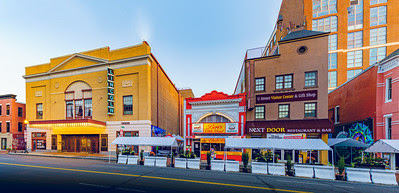
We celebrated a successful virtual Smart Growth Social at the end of October! Beth Osborne of Transportation for America gave an inspiring update on the exciting possibilities of transportation reform, while social breakout rooms provided a much needed opportunity to reconnect and network. If you weren’t able to make it, you can watch a recording of the event here. Congratulations to Ted Eytan, who won our photo contest with his stunning shot of Ben’s Chili Bowl:
Climate
The Metropolitan Washington Council of Governments (MWCOG) is preparing a Climate and Energy Action Plan (CEAP) for the year 2030 that will provide direction to regional efforts like TPB’s Visualize 2045 transportation plan update. However, the draft CEAP needs to set stronger land use, vehicle miles traveled reduction, and non-auto mode share goals and strategies to ensure the region adequately addresses its transportation sector emissions. CSG submitted comments to MWCOG and to TPB on this effort in October and this month we’re contiuing to work with our partners to push for a more robust plan. End of YearWith the end of the year comes end of year fundraising! This year has been unlike any other, and it has been especially tough for nonprofits. If you’ve been inspired by the work CSG has done this year to make our region a more livable, inclusive place, please consider supporting our work.Support CSG’s ongoing work with $5, $10, or $25 today!
Election updates
While the presidential election has been taking up a lot of bandwidth, lots of local elections also turned up promising results for the region.
In Virginia:
- Voters approved a constitutional amendment that will give redistricting authority to a bipartisan commission made up of citizens and legislators, rather than the governor and General Assembly.
- Preliminary results on bond referenda in Fairfax County show all 4 bonds (parks and recreation, public libraries, health and human services, and transportation) have passed with a safe margin, but certified results will not be available until November 16th.
In Maryland:
- Voters approved a measure that gives more authority to the General Assembly, allowing them to increase, decrease, or add items to the state budget as long as such measures do not exceed the total proposed budget submitted by the governor.
- In Montgomery County, voters passed Questions A and C, which remove an existing cap on overall property tax revenue and add two new District seats to the Council respectively.
In DC:
- The crowded field for two open at-large council seats in DC yielded a win for incumbent candidate Robert White and newcomer Christina Henderson.
A busy month in Maryland
This past Monday was the deadline for public comments on MDOT’s draft environmental impact survey for the proposed expansion of I-495/I-270. You can read our comments here and our joint comments with Sierra Club here.The Council will have their final vote to repeal the housing moratorium within the Subdivision Staging Policy this Monday. It’s been a long fight, but it is very likely that the housing moratorium will finally be repealed, once again enabling development in desirable growth areas of the County. Thank you to all the supporters and local advocates who helped make this happen!Public hearings for the update to the Montgomery County General Plan are on November 19th! Click here to sign up to testify before noon on November 18th. You can also submit written comments by sending them to MCP-Chair@mncppc-mc.org.For the final Montgomery for All meeting of the year, we will be joined by guest speaker Councilmember Will Jawando, who is one of three councilmembers on the Planning, Housing, and Economic Development (PHED) Committee. The PHED Committee is the primary body behind reviewing and implementing the updates to the General Plan, so it should be an interesting and fruitful meeting. Register here!
The fight continues in Virginia
Next week there will be a series of community meetings on service improvements to the Fairfax Connector in the Centreville-Chantilly-Vienna-Tysons areas. If you’re a Connector rider along any of these routes, RSVP to one of three meetings here or take the survey here. Connector service remains an essential service during the pandemic and your feedback is necessary to improve reliability, increase mobility, and provide better access to desirable destinations!
We’re continuing to monitor 495 Next, the proposed northern extension of express lanes on I-495. With our local partners, we won an extension to the comment deadline until December 4th. Our main concerns are the current lack of transit funding and the apparent rush to commit to the project before knowing the outcome and timing of Maryland’s plans. You can submit comments to VDOT and your elected officials using our email form here.
Arlington kicked off its missing middle housing study two weeks ago and we’re continuing to monitor its progress. You can read more about the study here and give input until December 31st.
Still fighting for a more affordable, inclusive DC
The second of two public hearings on the DC Comp Plan will take place today. The updates on the table have been long approved, it’s just a matter of adopting them. We’re fighting for adoption before 2021, before new councilmembers assume office. The DC Zoning Commission will hear the proposal for Expanded Inclusionary Zoning this Monday November 16th at 6:30pm. The proposed policy isn’t perfect, but the existing affordable housing crisis and the additional pressure generated by the pandemic has created the need for urgent action. You can read our testimony here and sign up to testify here. A survey on MoveDC, the District’s long range multimodal transportation plan, is currently open until tomorrow, November 14th. The last update to MoveDC occurred in 2014, and some aims of the upcoming update include:
- Map mobility networks for bicycles, transit and freight to achieve mode shift goals
- Address how recent, emerging and future mobility trends and innovations will shape our transportation system
- Ensure equity is a key consideration in making transportation decisions
Share your input with DDOT here!
Our work would not be possible without the support of people like you. Please consider making a donation today.
Thanks for all you do,
Stewart, Cheryl, Jane, Sonya, Emily, and Bill
CSG Comments to TPB on Climate Action
October 21, 2020
Hon. Kelly Russell
Chair, National Capital Region Transportation Planning Board
President Pro Tem, Frederick Board of Aldermen
Re: Comments on need TPB climate action steps, travel survey, and transit-oriented centers Dear Chair Russell,
We are deeply concerned that TPB staff are not committing to VMT-reduction strategies in their input to the update of the COG climate plan. We have submitted comments to the CEEPC that apply equally to our input to the TPB Visualize2045 update.
TPB’s climate approach, as outlined in the October 15 memo by director Srikanth, is to focus on fuel efficient car standards, vehicle electrification, and the Transportation & Climate Initiative (TCI). Of the “bold, system-wide actions” the memo says are needed, there is no mention of regional strategies to reduce VMT. As detailed in the Driving Down Emissions report by SGA, EVs are not enough, and land use, urban design, and transit are essential for reducing VMT and transportation emissions, meeting our climate targets, and achieving equity, public health, and livability.
COG is setting a very ambitious goal for electrification in its draft climate plan, assuming that 34% of light passenger vehicles on the road in 2030 will be electric. California’s analyses show that even with significant adoption of EVs, rising VMT will cause rising emissions. Therefore, the CEAP and TPB need additional bold actions:
1. Set even stronger targets for housing and job growth in High-Capacity Transit (HCT) station areas by prioritizing close-in, walkable, mixed-use Activity Centers with high-frequency transit, and addressing the E-W economic and racial divide.
2. Make affordable housing in TOD locations a key part of the land use strategy, with specific goals and strategies.
3. Set clear targets to significantly reduce total and per capita VMT below the 2030 and 2050 baselines and increase non-auto mode shares well above baselines.
4. Include strategies to price existing lanes in congested travel markets rather than adding more HOT lanes and price parking across the region.
Your Travel Survey highlights the benefits of transit-oriented communities. The Core and Activity Centers have very high commute walk, bike, transit mode share, and very good non-commute mode shares. But major suburbs still have far to go on TOD, and recent road expansions are not helping.
We commend your Transit-Oriented Communities initiative, but urge you to place overwhelming priority in Visualize 2045 on transit, local street networks, and bike/pedestrian infrastructure, while slashing new highway capacity. We have just one decade to act on the climate crisis.
Stewart Schwartz, Executive Director
RELEASE: CSG hails today’s Driving Down Emissions report – calls for DC area action
PRESS RELEASE
For Immediate Release:
October 14, 2020
Contact:
Stewart Schwartz, 703-599-6437
CSG hails new national climate, land use, and transportation report and issues a Call to Action to regional elected officials
Today, Smart Growth America (SGA) released Driving Down Emissions demonstrating that where and how we grow (i.e. land use and community design) is the critical piece for reducing emissions from transportation. CSG welcomed the report and issued a call to action to regional elected officials to act on their promises and move faster to implement more sustainable land use and transportation in order to fight climate change.
“We welcome this definitive report from SGA,” said Stewart Schwartz, Executive Director of the Coalition for Smarter Growth. We’ve campaigned in the DC region for over two decades for a strong core city and regional network of walkable, transit-oriented communities – a regional vision validated by the findings of the SGA report. Our vision has been embraced by the Council of Governments (COG) and most local officials, and we’ve seen a strong shift to these transportation-efficient communities — but much more work needs to be done AND faster if we are going to do our part to slash emissions.”
“The SGA report highlights that transportation is now the number one source of U.S. greenhouse gas emissions. Its share is even higher in the DC region where 34% of our greenhouse gas emissions are generated by on-road vehicles, and as illustrated by the SGA report it’s the location and design of development that is playing the central role in the amount of driving and emissions,” said Bill Pugh, Senior Policy Fellow for CSG.
“The DC region is at a literal crossroads. Right now, major land use and transportation decisions before our elected officials will determine whether this region fuels more sprawl, driving, pollution and greenhouse gas emissions, and worsens racial and social equity, OR chooses the course committed to at COG — to invest in transit-oriented development, transit and more affordable housing close to jobs and transit, to address racial and economic inequity, and reduce emissions,” said Jane Lyons, Maryland Advocacy Manager for CSG.
“Massive highway expansion such as the high-occupancy toll lanes in Virginia and Maryland, the recently approved Route 28 bypass in Prince William, and numerous arterial road widenings will mean more driving and emissions, and more spread-out development,” said Sonya Breehey, Virginia Advocacy Manager for CSG. “This must end.”
“Failure to incentivize and prioritize development at Metro stations and in aging commercial corridors will mean failure to reduce driving and emissions,” said Cheryl Cort, Policy Director for CSG. “Meanwhile approving more sprawling development in Prince William’s Rural Crescent or in rural areas in outer suburbs located 30 miles or more from the core of the DC region will mean even more driving and emissions,” said Breehey.
Driving Down Emissions summarizes decades of studies showing that highway expansion actually creates more traffic: “New highways, roads, and lanes induce more driving (VMT), which leads to more emissions and ultimately more congestion, a feedback loop referred to as “induced demand.” A recent study suggests driving increases in exact proportion with increases in lane-mileage—a 10 percent increase in lane miles can lead to a 10 percent increase in driving.”
“SGA offers five recommendations for how we can grow equitably and efficiently to reduce vehicle miles traveled and greenhouse gas emissions. This region offers examples, which we highlight below, for how we are trying to do this but also examples where we are falling short,” said Pugh.
SGA’s FIVE RECOMMENDATIONS AND A SNAPSHOT ON ACTIONS IN THE DC REGION
1) Meet the demand for homes in walkable, compact neighborhoods
- Last fall, thanks to years of CSG advocacy, our region adopted a set of regional housing targets to ensure that enough housing is produced by 2030 and that 75% of new units are located in Regional Activity Centers or near high-capacity transit. (MWCOG board resolution, September 11, 2019)
- While this is a good start, not all Regional Activity Centers are walkable or compact. Households in the Gainesville activity center in Prince William County, VA drive between 23,000 and 25,000 miles per year on average, while those in the mixed-use Mosaic District of Fairfax County, walking distance from the Metro, drive on average 15,000 to 16,000 miles per year. Households across the entire District of Columbia drive 12,000 miles per year on average, and the share of DC residents who walk, bike and take transit to work is well over 50% of all work trips.
- The COG 2019 State of the Commute Report shows that 75% of workers in outer suburban locations drive alone to work compared with only 37% in the region’s core jurisdictions (DC, Alexandria, Arlington). 58% of commuters in the core commuted by transit, walking or biking. (MWCOG).
2) Build safer, walkable streets
- CSG and partners have campaigned for Vision Zero, including street design changes necessary to end deaths and serious injuries for all users.
- Many local jurisdictions have adopted Vision Zero and Complete Streets policies, added protected bike lanes, and traffic calming, but much more needs to be done as pedestrian deaths in particular continue to increase.
- Among the many local places we are working, we are currently campaigning in Fairfax for redesign of Richmond Highway (Route 1) and reducing the speed from 45 mph to 35 mph. In this year alone, four people have been killed walking along or trying to cross Richmond Highway.
- Unfortunately, jurisdictions in the DC region are lagging counterpart regions in Europe and the U.S. in implementing protected bicycle lanes, dedicated bus lanes, and shared streets for people — a need spotlighted during the pandemic.
3) Set targets for VMT and GHG emissions reductions
- The regional Council of Governments is currently updating its Climate and Energy Action Plan and looking for ways to reduce greenhouse gas emissions 50% below 2005 levels by 2030. We probably need to do even more, and this is a crucial opportunity to set clear targets for reducing both total and per capita vehicle miles traveled to meet our 2030 greenhouse gas emissions reduction goal.
- As detailed in the SGA report, numerous studies have shown that more fuel efficient or fully electric vehicles are not sufficient to meet our transportation climate goals, and we must also reduce the need to drive. The region’s next climate plan and next update of its long-range transportation plan must clearly show how we do this.
4) Provide transportation options and make transit a priority
- CSG campaigned successfully for the first-ever dedicated funding for Metro with business allies in the MetroNow coalition and is campaigning for Better Buses — focusing on frequent, reliable, and affordable service. CSG won additional funding in Virginia for transit when the state transportation funding structure was amended earlier this year.
- The Transportation Planning Board, the states of Maryland and Virginia, the Northern Virginia Transportation Authority and many local governments, are still far too focused on expanding road capacity.
5) Prioritize connecting people to destinations
- We’ve learned that accessibility to daily needs is more important than long-distance “mobility.” DC, Arlington, Alexandria, Bethesda, Silver Spring, Falls Church, Tysons and the Mosaic District all show that proximity matters. Creating walkable, bike-friendly, mixed-use communities with frequent transit means that people can drive less and meet their daily needs.
- The 2016 GreenPlace study by CSG A study of five transit-oriented projects in DC showed daily household VMT and CO2 output per household to be far lower than regional averages. The analysis found that the TOD projects averaged 17 to 25.5 daily VMT per household and 16-25 lbs of daily carbon output per household, compared to regional averages of 45 daily VMT and 69.4 lbs daily carbon output.
- The 2010 CSG Cooler Communities study found that a development site with high walkability, mix of uses, and frequent transit service will have reduced CO2 emissions compared with a less accessible site, including in our suburbs. In addition, location, not just design, of development makes a huge difference. Hypothetical relocation of TOD projects to non-TOD suburban locations in the DC region increased CO2 emissions. Conversely, hypothetically relocating a non-TOD suburban development to a suburban TOD location reduced CO2 emissions. For example, the New Carrollton Transit District Plan reduced CO2 emissions by 11.2% when compared against relocating the plan build-out to auto-dependent Konterra.
A note about the pandemic and telecommuting:
The rise in telecommuting is expected to endure and will represent an estimated 10-15% reduction in work trips after the pandemic. This adds to further support for an end to highway expansion. However, most daily trips will continue to be non-work trips, but this reinforces the need to make all communities more walkable with nearby access to goods, services, and recreation.
CSG’s Call to Action in the DC Region:
“Unfortunately, we have much more to do in the DC region if we are going to drive down emissions to the levels necessary to stem climate change,” said Schwartz. Among the actions we need from our elected officials are:
1) Every local government needs to accelerate and incentivize transit-oriented development, supported by their state governments. The “Connect Greater Washington” study shows that TOD buildout will maximize the efficiency and farebox recovery for Metro, while reducing vehicle miles traveled and land lost to parking.
2) Every level of government should treat funding for affordable housing as a top infrastructure priority. $100 million for affordable housing near jobs and transit is worth far more than $100 million spent on another ineffective interchange. Housing that is affordable and in the right locations reduces driving and increases walking, biking and transit use, provides family security and health benefits, and results in better educational outcomes for children, while also driving down emissions.
3) Suburban and rural jurisdictions need to stem sprawl, protect farms, forests and rural landscapes that secure our drinking water, while focusing growth in existing towns, and ensuring new communities are compact, built on a grid of local streets, and connected to transit.
4) The next Council of Governments regional Constrained Long-Range Transportation Plan needs to cancel hundreds of lane miles of highway and arterial expansion and shift the funding to transit, local street networks, and bicycle pedestrian investment that support transit-oriented communities. The same is true for the next Northern Virginia Transportation Authority regional plan and state and local jurisdiction plans.
5) Every level of government needs to stop using vehicle level of service and “congestion reduction” as metrics for deciding what transportation investments to make. These measures ignore the real problem of induced demand and make our communities unwalkable and unlivable, leading to more driving and emissions.
“The SGA report confirms what officials in the DC region know and what the vast majority have committed to at COG and at the local level. We need every local elected official to follow-through on these commitments if we are going to grow sustainably, equitably and competitively, and beat climate change in the process,” concluded Schwartz.
###

MetroNow Emergency Transit Funding Sign-on Letter
Dear Members of the Congressional Delegation for Maryland, the District of Columbia and Virginia:
Transit is a lifeline for essential workers and critical to our economic health and well-being. The CARES Act, passed in March of this year, provided a stop gap to help transit agencies survive dramatic losses in revenue streams, unprecedented drops in ridership, and fund new and enhanced cleaning protocols, but the funding is running out. Transit agencies nationally need $32 billion in emergency operating funds to avoid damaging service and jobs cuts and minimize economic hardship.
The vast majority of WMATA funding comes from capital contributions, jurisdictional subsidies, and farebox revenues from riders. Since COVID-related restrictions were enacted in March, farebox revenues have evaporated. Bus fares were waived around the Capital Region to minimize interaction between rider and driver, and Metrorail, which kept fares intact, has averaged only about 10% of the pre-COVID ridership since March. In Maryland, the Transportation Trust Fund relies largely on motor fuel taxes, titling and registration fees, federal aid, sales tax, transit fares, and port and airport fees, all of which have taken a hit during the pandemic, with corresponding impacts to the Maryland Transit Administration (MTA). Meanwhile, as jurisdictions face the worst fiscal crisis in living memory, they are stripping budgets to the bones, leaving no room to alleviate losses in farebox revenue through additional jurisdictional subsidies.
When the CARES Act funding runs out, transit agencies will be forced to cut transit service and furlough or lay off workers or redistribute capital funds, intended for repairs and expansion, to operating budgets. Both options will seriously harm the viability, safety, and reliability of transit service in the short and long term, but more importantly, it will harm the riders, businesses, and regional economies and workers that depend on transit. Anticipating the lack of federal aid, WMATA and the Maryland Transit Administration have already warned of service and workforce cuts to address their COVID-19 revenue impacts. Cuts to transit will harm the region, weaken the economic recovery, slash capital expenditures and the jobs they support, and worsen inequality.
The economy cannot recover without transit. If Congress fails to act this month to fund $32 billion in emergency operating funds, it will deepen the economic pain already felt by millions throughout the country. In this time of uncertainty, grief, and loss, Congress must put aside their differences and work together to fund transit or this region will emerge weaker on the other side of the virus.
The undersigned business groups, transit agencies, unions and elected officials urge you to commit this critically needed funding for transit. Our riders, our economy, and our region depend on it.