Category: District of Columbia

Take Action: Tell DC Council to build affordable mixed-income homes at the Chevy Chase Civic Core

Take Action: Tell DC Council to build affordable mixed-income homes at the Chevy Chase Civic Core

September 29, 2026

We are close to fulfilling the promise of offering 90 quality affordable homes for DC residents who otherwise would not have the chance to live in Chevy Chase DC. The DC Council is now considering a bill to approve the agreement (B26-801) to build a new Chevy Chase library, community center, and affordable, mixed-income housing.

But this will not happen without people like you speaking up. The opponents are vocal, and bending the ears of our elected leaders. Tell your DC Councilmembers that yes! – you want 90 new affordable homes in a mixed-income redevelopment that builds a new library and community center for Chevy Chase. 

After years of planning, hearings, and debates, the District is ready to authorize the building of mixed-income housing along with a new Chevy Case library and community center. Here’s what’s in the plan:

  • A new library, community center, and public outdoor space
  • 90 affordable homes — more than half of the new 177 homes
  • 30% will be deeply affordable at 30% and 50% of area median income
  • 20% affordable for households earning up to 80% of area median income
  • 87 apartments will be market rate
  • All affordable homes remain affordable for the 99-year ground lease (which is actually an air rights lease).

This is a chance to create 90 new affordable homes at this rare public site in Ward 3. By using this public site, we can eliminate the otherwise high land cost which deters building affordable housing, especially in Ward 3. 

What’s next? We need Councilmembers Janeese Lewis George and Matt Frumin to schedule a joint hearing on legislation that would allow the development to proceed. Tell them you support this proposal and it’s time for the DC Council to act. We’ll follow up with you about the hearing once it is scheduled — or to push for the hearing if the Councilmembers delay in scheduling one.

Testimony: RFK stadium campus redevelopment, PR 26-810 (DC)

Testimony: RFK stadium campus redevelopment, PR 26-810 (DC)

September 30, 2026

Testimony before the Hon. Phil Mendelson, Chairman, Committee of the Whole, & Hon. Wendell Felder, Subcommittee of on Local Business Development

RE: Joint public hearing on the Robert F. Kennedy Memorial Stadium Campus Redevelopment: Robert F. Kennedy Campus Master Plan Small Area Plan Amendment to the Future Land Use Map of the District Elements of the Comprehensive Plan, PR26-0810

By Cheryl Cort, DC and Prince George’s Policy Director, Coalition for Smarter Growth, Sept. 30, 2026

Please accept these comments on the housing and mobility components of the draft RFK Campus Master Plan on behalf of the Coalition for Smarter Growth (CSG). CSG advocates for walkable, bikeable, inclusive, transit-oriented communities as the most sustainable and equitable way for the Washington, DC region to grow and provide opportunities for all. 

We appreciate the revisions to the draft plan which addressed some of our concerns. 

Affordable housing: The document addresses our request that the income targeting be explicit. The revised draft confirms that the 30% affordable set aside of the total 6,500 new homes will be split between 30% and 60% AMI.

Transit: The document has improved in its references to the Gold Line. It builds out the need, provides for dedicated bus lanes from Benning to the stadium, and clarifies the stadium armory Metro station improvements. It is well connected to the work WMATA is doing. Our outstanding transit/transportation concerns are:

  1. Funding for final design, engineering, and construction of Gold Line Bus Rapid Transit (BRT) service. The council and Mayor must make the commitments to this BRT project to ensure the transit service is functioning by opening day. 

We support the Gold Line plan and see its future benefit to serve a major transit corridor across the city, but the commitment to the BRT line seems uncertain – far less certain than the construction of giant parking garages. 

  1. Decision on location of transit plaza and inclusion and funding for it in the redevelopment plan remains a major gap. We reiterate the need for clarity around the location and function of a transit plaza, and the funding for its operations. The plan’s language states that WMATA recommends a site north of C Street and that the BRT line “could be supported by a multimodal transit plaza on the site.” This is a very passive way to talk about planning a future transit line and transit plaza essential to provide the transportation capacity for major events.

Below please find our more detailed comments. 

Affordable housing

CSG supports the overall commitment to 6,500 new homes, of which 30% will be affordable. We appreciate that the plan now explicitly states the income targeting of 30% AMI and 60% AMI.

CSG supports the plan’s phasing commitment for affordable units, that “To ensure the construction of affordable units keeps pace with market-rate units, the provision of affordable units should be phased so that no less than 30 percent of residential units built at any time are affordable, and the zoning for the campus should ensure compliance with this requirement.” We expect these commitments to be met. 

Transportation for a transit-first stadium

Planned Stadium-Armory Metro station upgrades are critical 

We commend the DC and WMATA commitments to upgrades to double the capacity of Stadium-Armory Metro station for $300 million. We appreciate that these Stadium-Armory Metro Station improvements will include elevators, escalators, stairs, mezzanines, and an expanded north entrance. These improvements will help distribute crowds for orderly, efficient, and safe station operations. These upgrades will be crucial to the success of the stadium as well as improved service for existing residents and future development. 

Gold Line Bus Rapid Transit (BRT): DC government must commit to funding final design, construction and operations

We strongly support the planning and full implementation of the Gold Line BRT line as a central component of the transportation strategy which relies on transit to provide the largest mode of access. The Gold Line BRT is needed to provide a fast, reliable, high-capacity connection to the Red Line at Union Station in Phase 1. This is to be center-running, dedicated bus lanes on H Street/Benning Road NE to deliver capacity, convenient, and competitive travel time to Union Station for transfers to the Red Line, Amtrak, MARC, and VRE. The Gold Line-Union Station connection would reduce pressure on Stadium-Armory Metro station, served by the Orange/Blue/Silver lines, and replace and improve on the discontinued DC Streetcar.

We commend DC’s $5 million allocation for the 30% Gold Line design. However, deeply concerning is that no funds are identified for the final design, construction, or operations of the Gold Line. DC must identify and program all necessary funding by spring of 2027 to be ready for opening day in 2030. 

Transit Center: show the site and bus priority lanes, and articulate the DC government and Master Plan commitment to implementing it

We are greatly concerned about the vagueness of commitment to the Transit Center in this land use master plan. The Transit Center is essential to attracting and efficiently boarding post-game riders on the Gold Line. 

Per the Master Plan:

“WMATA’s RFK Campus/Kingman Park Transit Improvements Study recommends a transit plaza to be located north of C Street NE. The plaza will have access to dedicated bus lanes and other priority infrastructure that link RFK to Union Station. The final location and design of bike and bus transit facilities will be determined through future feasibility and engineering studies.” (p. 108)

The Transit Center must be shown as a specific site and design concept in the Campus Master Plan. The plan must clearly commit to the Transit Center and the street design with bus priority lanes connecting to Benning Road to ensure high-performance BRT that achieves the needed ridership and reliability. This Master Plan should state that the DC government and this Master Plan are wholly committed to the Transit Center — not just mention that WMATA has made recommendations for a transit station.

Transit street connection KC-A between C Street NE & Benning Road NE

We support the concept of KC-A as a newly designed street between C Street NE and Benning Rd NE. The roadway is to support a new dedicated transitway, separated bike lanes, travel lanes that could be converted to parking lanes during lower-volume uses, and wide, tree-lined sidewalks.

Other Mobility Recommendations

Vehicle Parking

This stadium should be a transit-first stadium. This means giving priority to the modes used by the largest share of fans to access games — via Metrorail and Metrobus, along with bicycling, and walking. Motor vehicle parking should be limited. The Master Plan should minimize surface parking as much as possible, make the pause on a third parking garage permanent, and focus on improving access to the area by improved transit, bicycle networks, bicycle parking, and an enhanced walk environment. 

Bike network

We agree with the analysis and recommendations that WABA has provided. Bicycling has great potential to supplement transit access to the stadium if the Master Plan can provide high-quality bicycle facilities including protected bike lanes, convenient bike routes, and convenient, secure, high-capacity parking. The District must create safe cycling connections to areas surrounding the RFK Campus in time for the expected 2030 stadium opening. The District must provide fully protected bikeways across the Anacostia River along Pennsylvania Ave SE, East Capitol St, and Benning Road NE, as shown in the RFK Campus Context Plan, with fully protected bikeways extending into Wards 7 and 8 along those major arterials. Bike share and bike parking are essential, including bikeshare docking stations and bike-valet for events.

Serving a neighborhood

While much of the planning is focused on the stadium and what happens when an event occurs, the District needs to ensure that the existing and new neighborhood can function at all times. For example, significant amounts of bus service will need to operate in the new mixed-use districts every day with or without a game. This bus service needs to be able to get through all day, every day. Similarly, bicycle and walk access should be supported every day.

Thank you for the opportunity to comment. 

Release: Chevy Chase DC affordable housing supporters urge swift action

Release: Chevy Chase DC affordable housing supporters urge swift action

September 22, 2026

For Immediate Release

Contact: Cheryl Cort, cheryl@smartergrowth.net

Chevy Chase affordable housing supporters urge DC council to act on long-debated mixed-income housing proposal

Today, a group of local affordable housing supporters called on the DC Council to authorize building affordable mixed-income housing along with a new library and community center for Chevy Chase. 

The bill (B26-801) was introduced this week and is anticipated to be heard by the DC Council in October. The bill is assigned to two committees: one chaired by Ward 4 Councilmember Janeese Lewis George, and one chaired by Ward 3 Councilmember Matt Frumin.

“We’ve been planning and debating this proposal for years. It’s time to act. Chevy Chase needs this affordable housing. It also needs a new library and community center,” said former ANC3/4G Chair Lisa Gore, President of Chevy Chase Forward, a community group that is advocating for affordable housing as part of the redevelopment.

Since the selected project was announced, the number of affordable homes has increased to more than half of the 177 units. Thirty percent of the homes will be deeply affordable at 30% and 50% of area median income, and 20% of the units will be affordable for households earning up to 80% area median income. A total of 90 new affordable homes are planned for this rare public site in Ward 3. The affordability term for all the affordable units is 99 years, which is also the term for the ground lease (which is actually an air rights lease).

“I want others to have the opportunity that I’ve been able to provide to my son by finding a nice place I can afford in this lovely community. That’s also what I hear from my constituents,” said ANC 3/4G-05 Commissioner Karrenthya Simmons.

With the severe downturn in housing construction, especially for affordable housing construction in DC, this project promises to be one of the few groundbreakings DC will see in the next few years. 

“This proposal fulfills two goals of the social housing ideal: mixed-income housing, and DC’s retention of control of the land to ensure permanent affordability for these new homes,” noted WIN Ward 3 Steering Committee member Barbara Kraft.

“Ward 3, but especially Chevy Chase, has been historically exclusionary for far too long due to redlining, racial covenants, and detached single-family zoning. The Chevy Chase Civic Site development is a step in the right direction towards rectifying these historical wrongs and building more housing at all income levels in DC,” said Dennis Jing, a volunteer organizer for the DC YIMBYs. 

“In a time when no one is investing in new affordable housing in DC, this project is a standout opportunity to bring needed homes to this sought-after neighborhood,” said Ron Eichner, Ward3Vision steering committee member and long-time Chevy Chase resident.

This housing is part of the plan to rebuild the library, community center, and outdoor public space. Planning is already underway for programming for these new public facilities.

“This is a rare opportunity to make the most of public land to bring much needed affordable housing to this community. After years of planning, now it’s time to build affordable, mixed-income housing along with beautiful new public facilities,” said Randy Speck, Chevy Chase Forward board member and former chair of ANC 3/4G.

The next step is for the DC Council to schedule a public hearing on the proposal. The hearing is expected to occur in October. Supporters of mixed-income housing are urging Councilmembers to quickly review and approve the legislation to allow the project to go forward. 

This coalition for Chevy Chase affordable housing includes: Chevy Chase Forward, Ward3Vision, Coalition for Smarter Growth, DC YIMBYs, WIN Ward 3.

TESTIMONY: Comments on the Draft RFK Campus Master Plan, DC

TESTIMONY: Comments on the Draft RFK Campus Master Plan, DC

August 14, 2026

Ms. Anita Cozart, Director, DC Office of Planning

Via: OP.RFKMasterPlan@dc.gov

RE: Comment on RFK Campus Master Plan – Public Comment Draft

Dear Director Cozart:

Please accept these comments on the housing and mobility components of the draft RFK Campus Master Plan on behalf of the Coalition for Smarter Growth (CSG). CSG advocates for walkable, bikeable, inclusive, transit-oriented communities as the most sustainable and equitable way for the Washington, DC region to grow and provide opportunities for all. 

In summary:

  1. Affordable Housing – CSG reiterates our support for and expectation that all the housing and affordable housing requirements are met, phased together as the redevelopment plan builds out. 
  2. Gold Line and Transit Center – CSG is concerned that the Gold Line and Transit Center are not given sufficient priority, based on low funding commitments and lack of specificity for location and design in the draft Campus Master Plan. We urge clear commitments to: A) funding final design, construction and operations of the Gold Line BRT service to Union station, and B) the Transit Center’s location, design and buildout, which is the essential platform for attracting and efficiently boarding riders for the Gold Line. The goal should be to make this a transit-first stadium, where motor vehicle parking and private vehicles are minimized and sustainable modes of access maximized. 

We endorse the comments of the RFK Stadium Coalition, which represents residents and stakeholders working to ensure the RFK redevelopment delivers lasting public good through equitable development, environmental stewardship, affordable housing, and fiscal responsibility. We also endorse WABA’s helpful comments on the draft plan. 

Below are CSG’s detailed comments on housing and mobility.

  1. Affordable housing

CSG supports the overall commitment to 6,500 new homes, of which 30% will be affordable at 30% and 60% median family income. The income targeting should be explicitly stated in the plan, which is a requirement in B26-0288 – Robert F. Kennedy Campus Redevelopment Act of 2025.

CSG supports the plan’s phasing commitment for affordable units, that “To ensure the construction of affordable units keeps pace with market-rate units, the provision of affordable units should be phased so that no less than 30 percent of residential units built at any time are affordable, and the zoning for the campus should ensure compliance with this requirement.” We expect these commitments to be met. 

  1. Transportation for a transit-first stadium

Planned Stadium-Armory Metro station upgrades are critical 

We commend the DC and WMATA commitments to upgrades to double the capacity of Stadium-Armory Metro station for $300 million. We appreciate that these Stadium-Armory Metro Station improvements will include elevators, escalators, stairs, mezzanines, and an expanded north entrance. These improvements will help distribute crowds for orderly, efficient, and safe station operations. These upgrades will be crucial to the success of the stadium as well as improved service for existing residents and future development. 

Gold Line Bus Rapid Transit (BRT): DC government must commit to funding final design, construction and operations

We strongly support the planning and full implementation of the Gold Line BRT line as a central component of the transportation strategy which relies on transit to provide the largest mode of access. The Gold Line BRT is needed to provide a fast, reliable, high-capacity connection to the Red Line at Union Station in Phase 1. This is to be center-running, dedicated bus lanes on H Street/Benning Road NE to deliver capacity, convenient, and competitive travel time to Union Station for transfers to the Red Line, Amtrak, MARC, and VRE. The Gold Line-Union Station connection would reduce pressure on Stadium-Armory Metro station, served by the Orange/Blue/Silver lines, and replace and improve on the discontinued DC Streetcar.

We commend DC’s $5 million allocation for the 30% Gold Line design. However, deeply concerning is that no funds are identified for the final design, construction, or operations of the Gold Line. DC must identify and program all necessary funding by spring of 2027 to be ready for opening day in 2030. 

Transit Center: show the site and bus priority lanes, and articulate the DC government and Master Plan commitment to implementing it

We are greatly concerned about the vagueness of commitment to the Transit Center in this land use master plan. The Transit Center is essential to attracting and efficiently boarding post-game riders on the Gold Line. 

Per the draft Master Plan:

WMATA’s RFK Campus/Kingman Park Transit Improvements Study recommends a Campus Transit Center station to be located in or near Kingman Commons. The station will have access to dedicated bus lanes and other priority infrastructure that link RFK to Union Station. (Final location and design of bike and bus transit facilities will be determined through future feasibility and engineering studies.) (page 59)

The Transit Center must be shown as a specific site and design concept in the Campus Master Plan. The plan must clearly commit to the Transit Center and the street design with bus priority lanes connecting to Benning Road to ensure high-performance BRT that achieves the needed ridership and reliability. This Master Plan should state that the DC government and this Master Plan are wholly committed to the Transit Center — not just mention that WMATA has made recommendations for a transit station.

Other Mobility Recommendations

Vehicle Parking

This stadium should be a transit-first stadium. This means giving priority to the modes used by the largest share of fans to access games — via Metrorail and Metrobus, along with bicycling, and walking. Motor vehicle parking should be limited. The Master Plan should minimize surface parking as much as possible, make the pause on a third parking garage permanent, and focus on improving access to the area by improved transit, bicycle networks, bicycle parking, and an enhanced walk environment. 

Curbside management for for-hire vehicles

Taxis and for-hire vehicles should be managed to protect the priority movements of buses, bicycles, and pedestrians. Since we fully expect some visitors to use this mode, we should have a plan in place to manage their access and impacts. 

Bike network

We agree with the analysis and recommendations that WABA has provided. Bicycling has great potential to supplement transit access to the stadium if the Master Plan can provide high-quality bicycle facilities including protected bike lanes, convenient bike routes, and convenient, secure, high-capacity parking. The District must create safe cycling connections to areas surrounding the RFK Campus in time for the expected 2030 stadium opening. The District must provide fully protected bikeways across the Anacostia River along Pennsylvania Ave SE, East Capitol St, and Benning Road NE, as shown in the RFK Campus Context Plan, with fully protected bikeways extending into Wards 7 and 8 along those major arterials. Bike share and bike parking are essential, including bikeshare docking stations and bike-valet for events.

Serving a neighborhood

While much of the planning is focused on the stadium and what happens when an event occurs, the District needs to ensure that the existing and new neighborhood can function at all times. For example, significant amounts of bus service will need to operate in the new mixed-use districts every day with or without a game. This bus service needs to be able to get through all day, every day. Similarly, bicycle and walk access should be supported every day.

Thank you for the opportunity to comment. 

Sincerely,

Cheryl Cort

DC & Prince George’s Policy Director

Testimony: Support upzoning Wisconsin Ave. Metro corridor (DC)

Testimony: Support upzoning Wisconsin Ave. Metro corridor (DC)

CSC’s July 23, 2026 letter in support for Office of Planning’s Supplemental Report III recommendations, DC Zoning Case No. 25-13

July 23, 2026

Mr. Anthony Hood, Chairman, Zoning Commission of the District of Columbia

441 4th Street, NW, Suite 210S, Washington, DC 20001

RE: Support for Office of Planning’s Supplemental Report III recommendations 

In Zoning Case No. 25-13 — Proposed Zoning Text and Map Amendments to create and map – new Wisconsin Avenue Mixed Use zones for Friendship Heights and Tenleytown Metro station areas

Dear Chair Hood and Members of the Zoning Commission:

Please accept this testimony on behalf of the Coalition for Smarter Growth. We are a nonprofit organization advocating for walkable, bikeable, inclusive, transit-oriented communities as the most sustainable and equitable way for the Washington, DC region to grow and provide opportunities for all.

We wish to express our support for the recommendations in the Office of Planning’s Supplemental Report III. The data and analysis provided by OP provide a sound rationale for the recommendations for the three questions examined at the request the Zoning Commission. 

We have advocated for strengthening the form-based approach to zoning, rather than relying on a discretionary Design Review process. A Design Review process discourages new development due to the added risk of delay and uncertainty associated with a contested case. If the Zoning Commission plans to move forward with the use of Design Review for the new Friendship Heights and Tenleytown Metro zones, we support OP’s recommendations, which offer a more appropriate way to encourage quality redevelopment. 

Specifically, we support:

  1. Large lots of 15,000 SF and above in the Friendship Heights and Tenleytown Metro zones will be subject to Design Review by the Zoning Commission. Below 15,000 SF lot size, projects should be reviewed as matter of right projects. These smaller projects would still be reviewed for compliance with the zones’ urban design requirements, but not as a contested case. This approach is consistent with guidance of the Wisconsin Avenue Development Framework. OP’s rationale in the Supplemental Report III offers a detailed analysis of lot sizes and potential impacts. We concur with OP’s conclusion that 15,000 SF for lots in the two new Metro zones is an appropriate threshold for Design Review, if the Zoning Commission chooses to apply a Design Review requirement.
  2. Affordable housing projects are exempt, if they meet high affordability levels — 33% affordable for very low and extremely low income households, and are affordable for the life of the building. We support this exemption because affordable housing projects are far more sensitive, and less tolerant of the uncertainties created in the development review process. If we are serious about bringing more affordable housing to high opportunity neighborhoods like these ones – where little exists – we must do more to remove barriers. This exemption is a helpful step to lower barriers in the development review process. 
  3. Historic properties can be reviewed by the Historic Preservation Review Board (HPRB), and do not need a separate Design Review at the Zoning Commission. Appropriate design review can be provided by HPRB, since the project would already be subject to review at HPRB, and subject to the requirements of the zone that the project occurs in. A second review by the Zoning Commission would be largely duplicative. 

These recommendations will help advance increased housing, and affordable housing options in this high-opportunity Metro corridor. This rezoning helps implement the Wisconsin Avenue Development Framework and offers the potential for thousands of new homes, and the benefit that comes with that — attracting new shops, restaurants, and services around two Metro stations in Friendship Heights and Tenleytown, and the Wisconsin Avenue transit corridor. This significant upzoning advances the District’s goals to create more housing, and more affordable housing, especially in high opportunity and transit-accessible areas. 

Thank you for your consideration.

Sincerely,

Cheryl Cort

DC and Prince George’s Policy Director

Event materials: How innovative zoning can make DC a more livable and equitable city

Event materials: How innovative zoning can make DC a more livable and equitable city

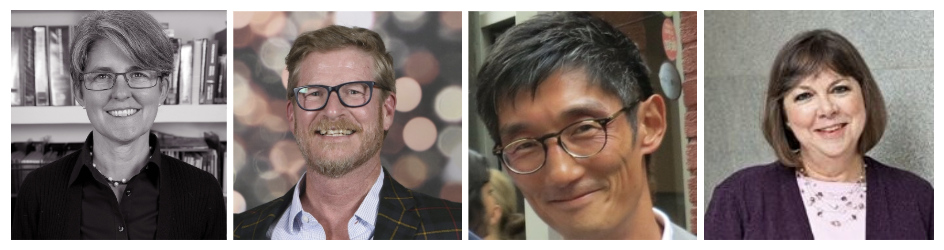
Pictured from left to right: Lisa Wise, Randy Hutcheson, Peter Park, Ellen McCarthy

This July 15, 2026 online event explored how a design-based approach to zoning can be used to increase housing opportunities and support the graceful evolution of neighborhoods across the city. Learn from the discussion with national thought leaders and practitioners as we explore how the DC 2050 Comprehensive Plan and Future Land Use Map can set the foundation for zoning reform. DC 2050 is the city’s updated comprehensive plan to guide growth over the next 25 years.

Featured speakers:

Lisa Wise, CEO and Principal, Lisa Wise Consulting; Lisa has over 30 years of experience in code audits and updates, long-range planning, housing policy, and land use economics, including working on code updates for Austin, Texas; Columbus, Ohio; and San Francisco, California.  

Randy Hutcheson, former Planning Manager at the City of Fort Worth, Texas; Randy has over 25 years of experience in writing, reviewing, and administering design-based codes, including overseeing downtown design, historic preservation, municipal code review.

Peter Park, former Planning Director, cities of Milwaukee and Denver; Peter has overseen preparation of numerous plans, comprehensive zoning code updates, and implementation of major infrastructure and development projects. He has over 25 years of, including special expertise in zoning code reform, transit-oriented development, and urban highway removal.

Ellen McCarthy, former DC Planning Director; adjunct professor, Georgetown University Urban and Regional Planning program.

Moderated by Marta Goldsmith, Ward3Vision Steering Committee

Presentations and Resources

Support for the B26-0684 – Autonomous Vehicle Deployment Authorization Amendment Act of 2026 (DC)

Support for the B26-0684 – Autonomous Vehicle Deployment Authorization Amendment Act of 2026 (DC)

July 2, 2026

The Honorable Charles Allen

Chair, Committee on Transportation and the Environment, Council of the District of Columbia

1350 Pennsylvania Avenue, NW,Washington, DC 20004

Re: Support for the B26-0684 – Autonomous Vehicle Deployment Authorization Amendment Act of 2026 

Chair Allen and Committee Members:

Our organization advocates for walkable, bikeable, inclusive, and transit-oriented communities as the most sustainable and equitable way for the Washington, DC region to grow and provide opportunities for all. We have been working in the District of Columbia for 29 years. 

The Coalition for Smarter Growth (CSG) supports Chair Allen’s bill, B26-0684, in particular its important provisions for: 

  • Reporting operations and safety data, including VMT and zero-passenger miles
  • Vehicle miles traveled tax
  • Supporting public transit 
  • Serving all wards
  • User interface for individuals with disabilities

CSG believes that autonomous vehicles (AVs) have the potential to improve roadway safety and provide an additional transportation option to persons without a car or unable to drive (especially in areas with limited transit options), and that AVs also have the potential to degrade our cities and towns by adding more traffic, car dependency, and control of public streets and curbspace by unaccountable private companies. Council Member Allen’s bill seeks to address these issues.

The District of Columbia must manage AVs to support adopted District policy that prioritizes people over vehicles. 

Specifically, DC’s transportation plan, MoveDC, has these policies: 

  • Policy H: Design and manage public space and the space along the roadway to be people-focused, promoting livability and public health by improving accessibility, sustainability, safety, and placemaking.
  • Policy I: Permit and program social, cultural, commercial, and flexible use of public space to improve the quality of life for current and future residents.
  • Policy Q: Promote partnerships and programs such as travel demand management to achieve 75% non-auto mode commute trips by 2032.
  • Policy R: Adapt policies to ensure equitable service, privacy protections, and data driven decision making as technology and new transportation services arise.

Multiple studies have concluded that unregulated AVs would have major impacts on traffic volumes. 

A recent academic synthesis of 26 studies found that shared AV adoption would increase total city traffic volumes by 5.3%, measured in vehicle miles traveled (VMT). This increase is enough to jam up key intersections and busy urban corridors. A 2020 DC scenario study of AV proliferation in the District of Columbia, likewise found that VMT and congestion would rise significantly without strong policy measures like congestion pricing.

AV legislation must discourage excess traffic, support transit, help travelers with disabilities, and ensure accountability and transparency by AV companies

We ask, in particular, that the following critical provisions of bill B26-0684 be incorporated in a new permitting system for shared or personal autonomous vehicles in the District:

  • Reporting operations and safety data, including VMT and zero-passenger miles
  • Vehicle miles traveled tax
  • Supporting public transit 
  • Serving all wards
  • User interface for individuals with disabilities

Thank you for your consideration. We urge the committee to recommend the bill to the full Council. 

Sincerely,

Cheryl Cort

DC & Prince George’s Policy Director

Event materials: What’s the future vision for how Ward 3 and DC will grow & change?

Event materials: What’s the future vision for how Ward 3 and DC will grow & change?

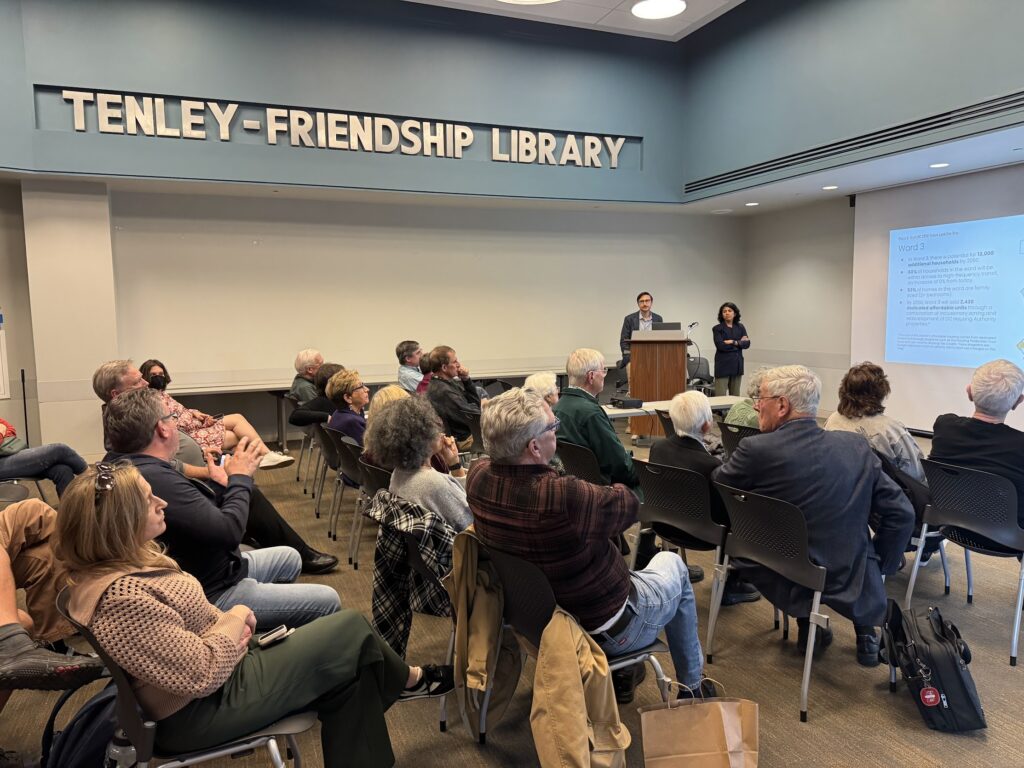
photo by Cheryl Cort

This event was a discussion with DC Office of Planning to learn about DC 2050, District’s next Comprehensive Plan and Future Land Use Map.

April 27, 2026, 6:00 – 7:30 pm, Tenley-Friendship Neighborhood Library

Speakers: Nick Kushner, Senior Cross-Systems Planner, DC Office of Planning

Radhika Mohan, Deputy Director, DC Office of Planning

Ellen McCarthy, Moderator, Ward3Vision

DC Office of Planning staff presented the planning process to date, and discussed proposed changes for the Future Land Use Map. DC 2050 will guide where and how we build new housing, grow job opportunities, and connect neighborhoods. DC 2050 aims to align land use policies and investments to make the District more equitable, affordable, and resilient. See DC 2050.

This event was co-sponsored by CSG, Ward3Vision, and Cleveland Park Smart Growth.

Testimony at DPR oversight hearing in support of Chevy Chase DC library redevelopment with increased affordable housing (DC)

Testimony at DPR oversight hearing in support of Chevy Chase DC library redevelopment with increased affordable housing (DC)

We are pleased to express our support for the capital funds for a new Chevy Chase recreation center, along with a new library, civic and outdoor recreation space, and affordable, mixed-income homes at the Chevy Chase Civic Core site.