Category: Take Action

CSG Testimony in support of Accessory Living Units in Fairfax County

Oct. 29, 2026
Fairfax County Planning Commission
12000 Government Center Pkwy
Fairfax, VA 22035

Good evening, Fairfax County Planning Commissioners. My name is Becca Dedert, and I serve as the Virginia Housing Advocacy Specialist with the Coalition for Smarter Growth. CSG advocates for walkable, transit-oriented communities as the most sustainable way for our region to grow. I am speaking today in support of the ALU zoning ordinance amendment, with two key recommendations. 

I want to begin by thanking all of you for your thoughtful consideration of this update, as well as staff members Casey Judge and Carmen Bishop for their extensive research and community outreach.

Fairfax County’s Housing Needs and the Benefits of ALUs

First, I would like to ground ourselves in the county’s 2026 Housing Needs Assessment. According to the report, Fairfax will need at least 40,000 and up to 95,000 new homes by 2035 to keep pace with growth and address our severe housing shortage.

However, Fairfax County’s existing ALU regulations are so restrictive that in the five years since these rules took effect, only 158 have been built countywide, and over half of all applications have been denied. 

It will take every tool in the policy toolbox to meet our housing needs. This update is an opportunity for ALUs to be a real part of the solution

ALUs are an incredibly beneficial housing option. They offer flexibility for different stages of life, encouraging intergenerational living and helping meet specialized housing needs.  Because of their smaller footprint, ALUs are one of the most low-cost forms of housing. Letting homeowners safely and easily build ALUs on their property is one of the most organic and cost effective ways we can address our housing needs. 

Our Recommendations

We strongly endorse staff’s Option 1 recommendations to eliminate ongoing owner-occupancy mandates, remove extra parking space requirements and recurring permit renewals, increase the allowable sizes of ALUs, and streamline approvals into standard building permits. These are regulations that align with best practices, and we commend staff for including them in this update. 

However, to turn ALUs into a real, functional housing strategy, we must address two major remaining barriers. First, our most significant concerns center around minimum lot size restrictions for detached ALUs. 

The staff report proposes reducing the by-right minimum lot size for detached ALUs to 36,000 square feet. While an improvement from the previous 2 acre requirement, 36,000 square feet is still nearly a full acre, almost an entire football field. This restriction excludes over 86% of detached, single-family lots, locking out almost every homeowner in our most walkable, transit-oriented neighborhoods.
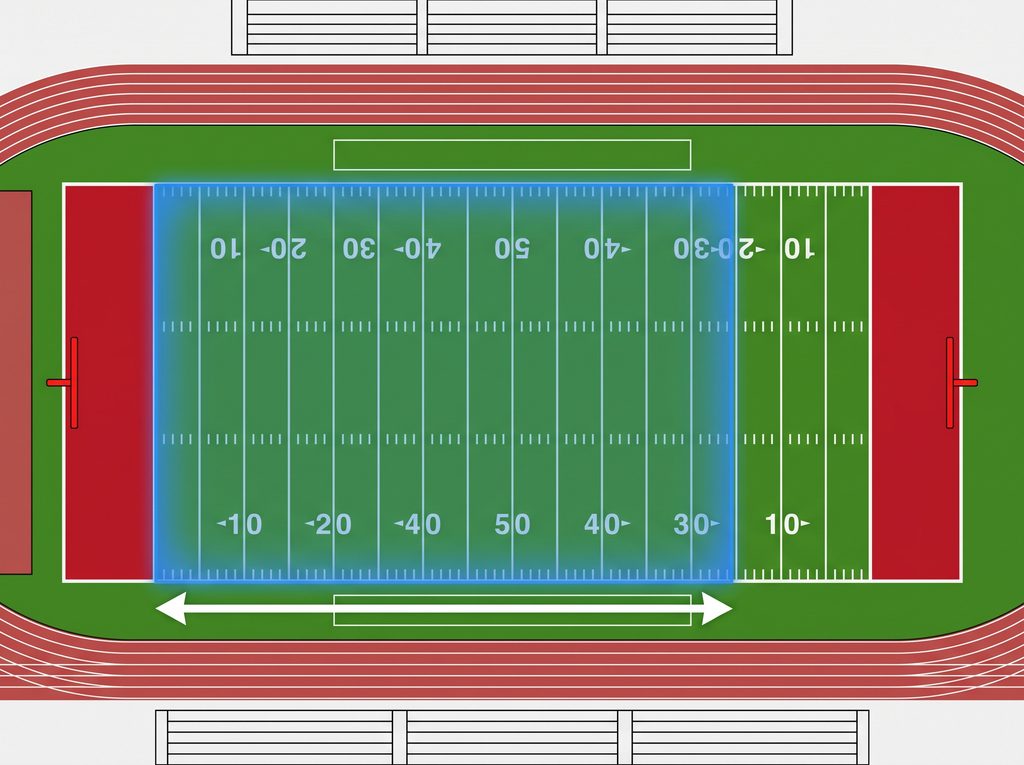
The highlighted area is 36,000 sq. ft., the proposed minimum lot size needed to build a standalone ALUs

Minimum Lot Sizes for Detached ALUs

Minimum lot sizes for ALUs are a regional anomaly. None of our neighboring jurisdictions have this requirement, which poses a significant deterrent to homeowners. Public hearings introduce high application costs, months of delay, and severe uncertainty that discourages moderate-income homeowners and builders from even attempting to build detached units. 

Additionally, minimum lot sizes were not a priority expressed by the public in the county’s community engagement survey. Over half of all respondents supported allowing detached ALUs without a public hearing, and for all of the lot size scenarios presented, more respondents supported administrative approvals than special hearings. This restriction does not reflect a clear community mandate. 
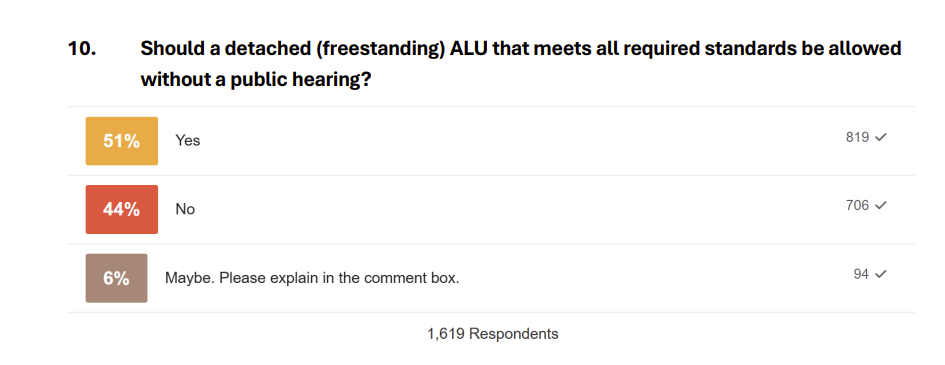
Over half of respondents to Fairfax County’s community survey on ALUs support allowing freestanding ALUs without a public hearing

It is also important to recognize that standard-compliant detached ALUs remain strictly governed by standard zoning bulk rules, including:

  • Standard side, front, and rear setbacks,
  • Subordinancy to the primary home,
  • Maximum yard coverage limits, and 
  • County tree canopy and stormwater ordinances.

Other freestanding accessory structures, such as garages or workshops, are permitted by right with the same setback and height requirements. The only difference is that ALUs provide housing. 

This restriction incentivizes teardowns and additions over gentle infill development. Under our existing code, a homeowner or developer can demolish a modest home and build several thousand additional square feet completely by-right. These expansions consume massive yard footprints, eliminate tree canopy, and loom over adjacent yards. Yet, if that same homeowner wants to build a modest, subordinate 600-square-foot cottage, we force them through a public hearing. Removing lot size limits encourages homeowners to preserve their existing homes while adding smaller, low-impact units.

We strongly encourage the Planning Commission to meet standard practices for accessory home regulations and eliminate minimum lot size requirements entirely for detached ALUs.

Internal ALUs for Townhomes

Second, we urge the Planning Commission to allow internal ALUs for attached single-family homes, to maximize housing flexibility across all residential build types and encourage transit-oriented development. Allowing interior townhome ALUs by-right matches the policies of our neighboring jurisdictions as well as the state’s legislative standards, and will allow for additional density in the townhome communities adjacent to our Metro Stations. These homeowners should be permitted to maximize their underutilized attic or basement spaces to provide safe, self-contained, and lower-cost housing. 

Conclusion

We encourage the Planning Commission to adopt staff’s core recommendations on parking, owner-occupancy, occupancy limits, size increases, and recurring permit renewals, but to take the final necessary steps to remove all minimum lot size requirements for detached ALUs and to allow internal ALUs in attached single-family homes by right. Lifting these restrictions will allow us to have a functional ALU policy that enables gentle infill and transit-oriented development, while addressing our housing goals. Let’s give Fairfax County families the housing options they need.

Thank you.

Becca Dedert
Virginia Housing Advocacy Specialist

Take Action: Tell DC Council to build affordable housing at Chevy Chase Civic Core at Nov. 12 hearing

Take Action: Tell DC Council to build affordable housing at Chevy Chase Civic Core at Nov. 12 hearing

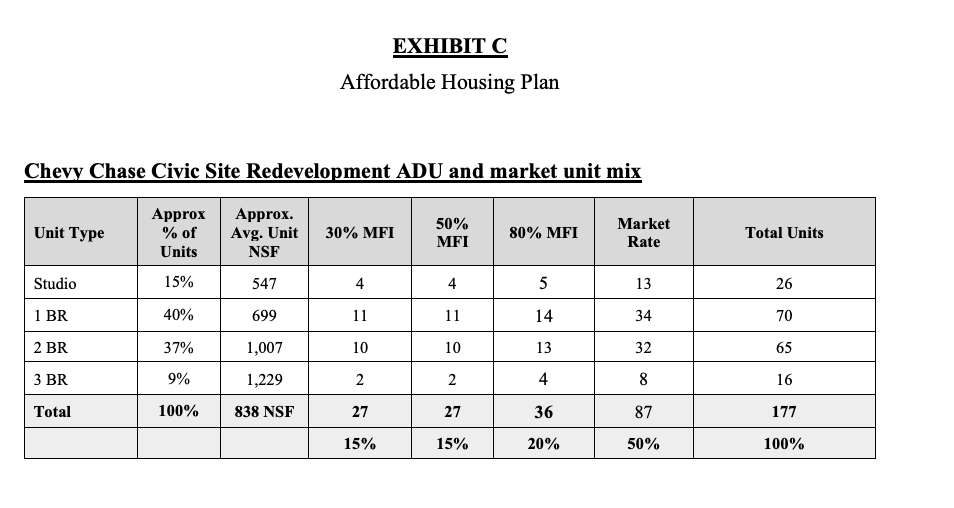
On November 12, 2026 Councilmember Matt Frumin will hold a hearing on the proposal to rebuild the Chevy Chase library, community center, public outdoor space, and add 177 mixed-income homes — 90 of which will be affordable apartments (Council bill B26-801). This proposal increases the number of affordable homes to more than half of the total units. 

We need to speak out and send letters of support to win this! The opponents are sure to make their voices heard. Send a letter and better yet — testify virtually or in person — on Nov. 12.

The Ward 3 site is a rare opportunity to use no-cost public land to create new housing in an affluent neighborhood that offers no dedicated affordable housing, and where almost no new homes have been built in recent years.

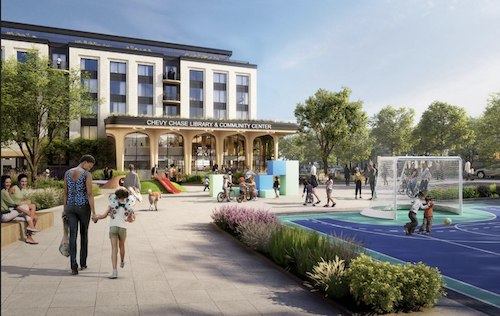
After years of planning, hearings, and debates, the District is ready to authorize the building of mixed-income housing along with a new Chevy Case library and community center. Here’s what’s in the plan:

  • A new library and community center
  • enlarged usable public outdoor space for play and gathering
  • 90 affordable homes — more than half of the total new 177 homes
  • 30% will be deeply affordable at 30% and 50% of area median income
  • 20% affordable for households earning up to 80% area median income
  • 87 apartments will be market rate
  • All affordable homes remain affordable for the 99-year ground lease (which is actually an air rights lease).

We need to testify and submit letters of support for the hearing chaired by Councilmember Frumin on Nov. 12.

We also need to turn out again when Councilmember Janeese Lewis George schedules a hearing for the bill in her committee.

Tell them you support this proposal and that it’s time for the DC Council to act.

Source: Rift Valley
https://dmped.dc.gov/sites/default/files/dc/sites/dmped/page_content/attachments/1.16.26_Chevy%20Chase%20Civic%20Site%20Renderings.pdf
Illustration of rear entrance to Chevy Chase library, community center, outdoor play space and mixed income housing. Source: Rift Valley.

Want to see more?

Final opportunities to support Accessory Living Units in Fairfax County!

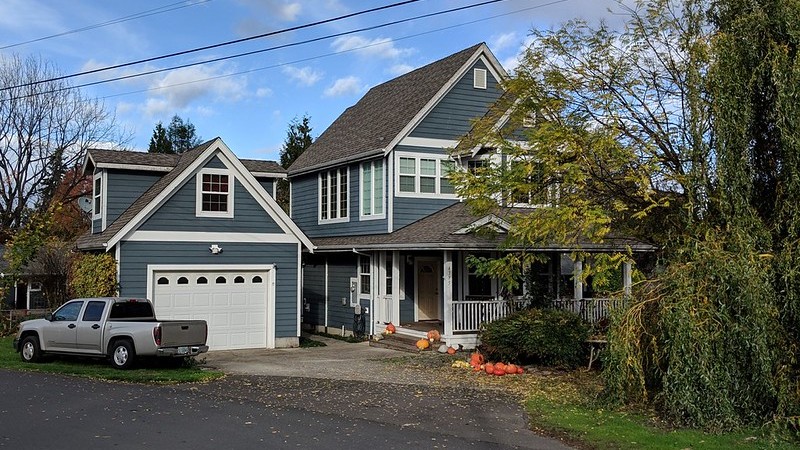
Detached Mother-in-law suite, courtesy of the Sightline Housing Solutions Photo Library, CC BY 2.0 (cropped)

Time is running out – our window is closing to make Accessory Living Units a real housing solution for Fairfax County. While the most recent staff recommendations include some big wins, the county is still unwilling to let go of minimum lot sizes for standalone ALUs.

To be clear, this is not a standard policy for accessory homes. None of our neighboring jurisdictions require minimum lot sizes, but Fairfax County wants anyone with less than 36,000 square feet (that’s almost an acre!) to go through a burdensome special permit process to access this housing option. Join us in urging the county to remove the minimum lot size requirement ahead of the upcoming hearings! 

Want to make an even bigger impact? We cannot over-emphasize the importance of testimonials. Luckily, Fairfax County makes it very easy to offer testimony. We’ll be there in-person, but you can also testify by calling in or recording a video.

Oct. 29 – Planning Commission
Nov. 17 – Board of Supervisors

First, the good news. County staff heard your voices and supported key recommendations we pushed for in our initial campaign, including: 

  • Removing mandated parking requirements (this is big!)
  • Dropping owner-occupancy requirements.
  • Allowing standard-compliant ALUs by-right, without the need for additional administrative permits.
  • Dropping permit renewal requirements.
  • Permitting at least three occupants per unit, with the potential to go up to four. 

The proposed minimum lot size requirement excludes 86% of homeowners from building backyard cottages, and is particularly challenging for homeowners with smaller, transit-adjacent lots. This creates a major tripwire that will undermine the intention of this policy to create access to a flexible, cost-effective housing option. Help us finish the campaign strong by sending a message to the county – we want to see real housing reforms!

Known as granny flats, in-law suites, or backyard cottages, accessory dwellings are among the most versatile and cost-effective housing options available.

  • Flexibility for Every Stage of Life: ALUs allow older adults to age in place with dignity, offer young adults a place to live while saving money for college or their first home, and make intergenerational living accessible.
  • Affordable by Design: Because of their smaller footprint, ALUs are naturally lower cost to construct and rent, expanding housing choices without requiring massive infrastructure changes.
  • Meeting Our Housing Goals: Fairfax County needs tens of thousands of new homes over the next decade to meet our housing needs. Letting homeowners safely build ALUs on their own property is one of the easiest ways to increase our housing supply.

We have the ability to make ALUs a powerful tool in the effort to expand access to housing for more Fairfax residents. We hope you will express your thoughts to the county in support of relaxing the current ALU regulations and making this an actionable housing strategy. 

Take Action: Tell DC Council to build affordable mixed-income homes at the Chevy Chase Civic Core

Take Action: Tell DC Council to build affordable mixed-income homes at the Chevy Chase Civic Core

September 29, 2026

We are close to fulfilling the promise of offering 90 quality affordable homes for DC residents who otherwise would not have the chance to live in Chevy Chase DC. The DC Council is now considering a bill to approve the agreement (B26-801) to build a new Chevy Chase library, community center, and affordable, mixed-income housing.

But this will not happen without people like you speaking up. The opponents are vocal, and bending the ears of our elected leaders. Tell your DC Councilmembers that yes! – you want 90 new affordable homes in a mixed-income redevelopment that builds a new library and community center for Chevy Chase. 

After years of planning, hearings, and debates, the District is ready to authorize the building of mixed-income housing along with a new Chevy Case library and community center. Here’s what’s in the plan:

  • A new library, community center, and public outdoor space
  • 90 affordable homes — more than half of the new 177 homes
  • 30% will be deeply affordable at 30% and 50% of area median income
  • 20% affordable for households earning up to 80% of area median income
  • 87 apartments will be market rate
  • All affordable homes remain affordable for the 99-year ground lease (which is actually an air rights lease).

This is a chance to create 90 new affordable homes at this rare public site in Ward 3. By using this public site, we can eliminate the otherwise high land cost which deters building affordable housing, especially in Ward 3. 

What’s next? We need Councilmembers Janeese Lewis George and Matt Frumin to schedule a joint hearing on legislation that would allow the development to proceed. Tell them you support this proposal and it’s time for the DC Council to act. We’ll follow up with you about the hearing once it is scheduled — or to push for the hearing if the Councilmembers delay in scheduling one.

Action Alert: Support ADUs in Prince George’s

Action Alert: Support ADUs in Prince George’s

On September 3, 2026, the Prince George’s County Council will consider a bill (CB 74) to permit accessory dwelling units (ADUs). This bill is driven by a state law that requires local governments to ease restrictions on ADUs and allow them by right in single family zones. After years of talking about it, now something is finally happening! Send a letter of support to the County Council. Also take a short Council survey on the proposal. Tell them we want ADUs – without a lot of onerous restrictions. 

Why we love ADUs

The bill would allow this flexible housing type on a single-family lot, diversifying housing options that can better meet the needs of families and the community. Here are some of the benefits:

  • Allows smaller, less costly housing in an existing neighborhood with existing services;
  • Helps an aging couple add a dwelling so that their adult children can live on the same lot;
  • Enables a family to add a unit for an adult child with a disability, providing both proximity and independence, or provides a caregiver living space;
  • Helps a young family cover the costs of homeownership by renting out a backyard cottage or basement apartment.

What’s in the bill 

The current bill (CB 74-2026) at a County Council committee will legalize ADUs with reasonable rules — which follow the state law which requires local governments to allow ADUs. 

The bill would allow an ADU as a matter of right that:

  • Is on the same lot with a single-family detached house;
  • Is not greater than 75% of the size of, and is subordinate to the principal house;
  • Can be a separate structure (e.g. garage conversion) or an addition to, or inside the existing house (e.g. basement apartment);
  • No taller than 22 feet, or shorter than the principal house;
  • Does not add more than 900 square feet of lot coverage as an addition to the principal house.

These are basic rules that still allow a one or two story accessory independent living unit that is smaller than the principal single-family detached house. This works!

Beware of excessive restrictions

ADUs are often stymied by excessive regulations such as owner-occupancy requirements, and complicated forms, extra reviews and approvals. Send a letter — say you want to welcome ADUs into Prince George’s neighborhoods, without a lot of onerous restrictions. 

Weigh in before the Council’s committee meeting on September 3, 2026