
Learn from Montgomery County, Maryland Planning staff and local advocates about the basics of navigating the master plan process, advocacy tips, and why your engagement makes a big difference!
Category: Housing
Final opportunities to support Accessory Living Units in Fairfax County!
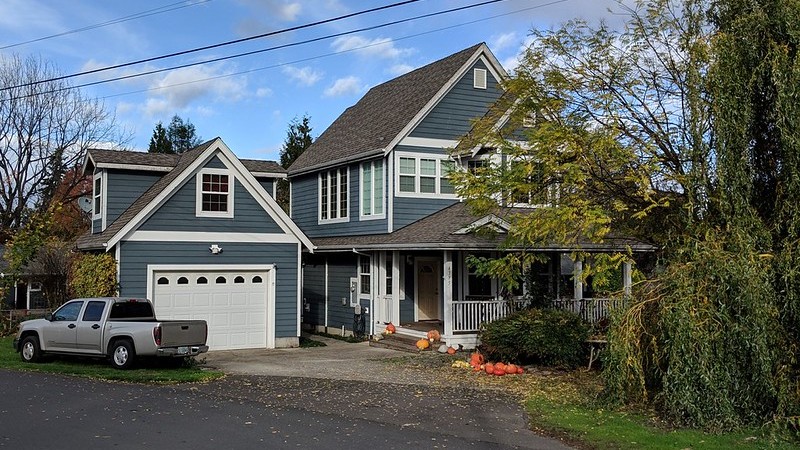
Detached Mother-in-law suite, courtesy of the Sightline Housing Solutions Photo Library, CC BY 2.0 (cropped)
Time is running out – our window is closing to make Accessory Living Units a real housing solution for Fairfax County. While the most recent staff recommendations include some big wins, the county is still unwilling to let go of minimum lot sizes for standalone ALUs.
To be clear, this is not a standard policy for accessory homes. None of our neighboring jurisdictions require minimum lot sizes, but Fairfax County wants anyone with less than 36,000 square feet (that’s almost an acre!) to go through a burdensome special permit process to access this housing option. Join us in urging the county to remove the minimum lot size requirement ahead of the upcoming hearings!
How can I take action?
If you haven’t yet, NOW is the time to send a letter to the county. Your voice is extremely important!
Want to make an even bigger impact? We cannot over-emphasize the importance of testimonials. Luckily, Fairfax County makes it very easy to offer testimony. We’ll be there in-person, but you can also testify by calling in or recording a video.
Oct. 29 – Planning Commission
Nov. 17 – Board of Supervisors
Please email becca@smartergrowth.net if you have questions – we are more than happy to help you with signing up, drafting comments, or finding the right format for you.
So – what’s in the Staff Report?
First, the good news. County staff heard your voices and supported key recommendations we pushed for in our initial campaign, including:
- Removing mandated parking requirements (this is big!)
- Dropping owner-occupancy requirements.
- Allowing standard-compliant ALUs by-right, without the need for additional administrative permits.
- Dropping permit renewal requirements.
- Permitting at least three occupants per unit, with the potential to go up to four.
The proposed minimum lot size requirement excludes 86% of homeowners from building backyard cottages, and is particularly challenging for homeowners with smaller, transit-adjacent lots. This creates a major tripwire that will undermine the intention of this policy to create access to a flexible, cost-effective housing option. Help us finish the campaign strong by sending a message to the county – we want to see real housing reforms!
Why Accessory Dwellings Matter for Fairfax County
Known as granny flats, in-law suites, or backyard cottages, accessory dwellings are among the most versatile and cost-effective housing options available.
- Flexibility for Every Stage of Life: ALUs allow older adults to age in place with dignity, offer young adults a place to live while saving money for college or their first home, and make intergenerational living accessible.
- Affordable by Design: Because of their smaller footprint, ALUs are naturally lower cost to construct and rent, expanding housing choices without requiring massive infrastructure changes.
- Meeting Our Housing Goals: Fairfax County needs tens of thousands of new homes over the next decade to meet our housing needs. Letting homeowners safely build ALUs on their own property is one of the easiest ways to increase our housing supply.
We have the ability to make ALUs a powerful tool in the effort to expand access to housing for more Fairfax residents. We hope you will express your thoughts to the county in support of relaxing the current ALU regulations and making this an actionable housing strategy.

Testimony: Bill 41-26 to support ADUs in Montgomery County, MD
We are writing in strong support of Bill 41-26 to expand access to accessory dwelling units (ADUs). This bill will reduce barriers for those who want to provide ADUs for rent, and increase affordable access to these homes for renters.
Testimony: Support for Virginia Village Affordable Housing in Falls Church
CSG testified in the support of the affordable housing development Virginia Village to the Falls Church City Council on Sept. 28
Testimony: Support with amendments CB 074-2026, allow Accessory Dwelling Units (ADUs) (Prince George’s)
September 28, 2026
Hon. Krystal Oriadha, Chair, Prince George’s County Council
Wayne K. Curry Administration Building, 1301 McCormick Drive, Largo, MD 20774
RE: Support with amendments CB 074-2026, allow Accessory Dwelling Units (ADUs)
Dear Chair Oriadha and members of the Council:
Please accept this testimony on behalf of the Coalition for Smarter Growth. CSG advocates for walkable, bikeable, inclusive, transit-oriented communities as the most sustainable and equitable way for the Washington, DC region to grow and provide opportunities for all. We also support and work closely with RISE Prince George’s, a group of county residents and allies advocating for policies and practices that build shared, sustainable prosperity in Prince George’s County by creating safe, walkable, inclusive and transit-oriented communities.
CSG supports CB 74, to permit accessory dwelling units (ADUs) as a matter of right on lots with single family detached homes. ADUs offer an innovative, smaller housing type that helps residents meet their housing needs. While this bill is required to conform to state law, ADUs have been supported as a helpful housing type in many Prince George’s policies and documents. We are excited to finally be getting to implementation.
We urge the council to support this bill, without onerous restrictions that make it that much harder to build an accessory living unit. The high cost of building an ADU remains a challenge, even with the lowering of regulatory barriers. Adding costly and complicated requirements will have a major impact on the ability of a resident to build an ADU.
ADUs offer many benefits
ADUs offer many benefits to individual families and to the community. ADUs help meet a variety of needs, and often help provide new types of housing close to in-demand locations like Metro stations and downtowns. Benefits include providing smaller, less costly housing in an existing neighborhood already served by existing infrastructure. These new, smaller homes help fulfill housing needs such as: caregiver housing for an aging homeowner or for an adult child with a disability. A separate living unit on the same lot with a single family home gives a family member independence while also simultaneously providing proximity. An ADU can also help a young family afford to have a larger home by allowing them to rent out the unit until they are ready to use the expanded living space for themselves.
Avoid overregulating ADUs
The bill provides a number of reasonable restrictions to ensure that an accessory unit is subordinate to the principal dwelling. However, we recommend the following amendments to avoid unnecessary regulations that discourage the creation of ADUs:
- Remove or modify owner occupancy requirement: The owner occupancy requirement discourages ADU construction by creating additional bureaucratic process and uncertainty about changing needs over time for the homeowner. A legal covenant also dampens sales of the property. If the owner occupancy requirement remains, we recommend using the State Department of Assessment and Taxation (SDAT) database to identify owner occupied properties rather than a covenant.
- Avoid a new definition for lot occupancy: the bill lumps associated walkways, patios, or other impervious surfaces with the lot coverage limit of 900 square feet. We recommend not redefining lot coverage but instead regulate impervious areas through existing regulations for imperviousness.
We advise against overregulating ADUs because they are already costly and challenging to build. Each restriction must be considered carefully so as not render the right to build moot by restrictions that make it effectively impossible. Across the country, as local jurisdictions have lowered restrictions on ADUs, we’ve seen them built. However, other jurisdictions continue to impose too many requirements which are holding back the potential for these smaller homes, and all the benefits that come with them.
We urge the council to adopt the bill with our proposed amendments. Thank you for your consideration.
Sincerely,
Cheryl Cort, DC and Prince George’s Policy Director
All Things Montgomery: September 2026
Thank you to those who joined us in Wheaton last Thursday for a Wheaton Plan get-together at Sabor Mixteco! We’ll have a chance to gather again at Smart Growth Social, CSG’s annual party at Eastern Market on October 21. Grab your ticket today!
Testimony: Amend CB 92-2026, Accessory Dwelling Units (ADUs) requirements in Prince George’s County
September 14, 2026
Hon. Wala Blegay, Chair, PHED Committee, Prince George’s County Council
Wayne K. Curry Administration Building, 1301 McCormick Drive, Largo, MD 20774
RE: Amend CB 092-2026, Accessory Dwelling Units (ADUs) requirements
Dear members of the Committee:
Please accept this testimony on behalf of the Coalition for Smarter Growth. CSG advocates for walkable, bikeable, inclusive, transit-oriented communities as the most sustainable and equitable way for the Washington, DC region to grow and provide opportunities for all. We also support and work closely with RISE Prince George’s, a group of county residents and allies advocating for policies and practices that build shared, sustainable prosperity in Prince George’s County by creating safe, walkable, inclusive and transit-oriented communities.
We have several concerns about this bill which could create unnecessary barriers to creating an accessory dwelling unit on a single family detached house lot.
- Owner occupancy – we oppose this requirement as an impediment to creating ADUs. However, if this requirement is implemented, we ask that the provisions for exceptions be broadened to allow more time for an absent owner to rent out the property. We recognize the bill has created a path for new construction, which is welcome.
- Notice – we oppose the provision for an informational notice. The purpose of this is unclear. It creates a new, special notice provision that is an unnecessary burden for an owner who is building and ADU. This notice provision treats the action like a partial variance or special exception process – yet a new process would have to be invented.
- Short term rental – we oppose special restrictions on short term rental for ADUs. We recommend that ADU rentals be governed by county law on short term rentals. Short term rentals should be governed by rental licensing provisions.
- Woodland, Wildlife Conservation and Tree Canopy Coverage ordinances – we oppose this special provision for ADUs to be restricted from variances, waivers. We recommend that the ADU be subject to the same standards in these ordinances.
- Imperviousness surface requirements – we ask that the Council ensure this provision be consistent with existing treatment of single family residential uses. We suggest that the provision for adding a small amount of imperviousness could be addressed by setting a threshold under which new construction can comply with existing permitted imperviousness. We also recognize that the Planning Department comments recommend deleting this provision, as lot coverage can be assessed through the building permit site plan.
We urge the Committee to support the creation of ADUs, without adding costly and complicated requirements that will have a significant impact on the ability of a resident to build an ADU.
ADUs offer many benefits to individual families and to the community. ADUs help meet a variety of needs, and often help provide new types of housing close to in-demand locations like Metro stations and downtowns.
ADUs benefit the environment by providing smaller, less costly housing in an existing neighborhood already served by existing infrastructure. This creates more affordable housing options, while better utilizing existing public investments. These smaller homes help fulfill housing needs such as caregiver housing for an aging homeowner or for an adult child with a disability. An ADU can also help a young family afford to have a larger home by allowing them to rent out the unit until they are ready to use the expanded living space for themselves.
We urge the Committee to remove the burdensome requirements from this bill so we can encourage this flexible type of housing. It’s hard enough to build an ADU, it might be impossible with costly, complicated restrictions.
Thank you for your consideration.
Sincerely,
Cheryl Cort, DC and Prince George’s Policy Director
CSG in the News: Hopes are pinned on Viva White Oak to transform eastern Montgomery County
Carrie Kisicki, the Maryland housing advocacy manager at the Coalition for Smarter Growth, said she hopes future projects in White Oak will exceed the county’s affordable housing minimum.
Still, she said, even Viva White Oak units that aren’t designated as moderately priced will help people live more affordably by shortening costly commutes.
A more welcoming + sustainable future for Friendship Heights, MD
Send a message to the Montgomery County Planning Board today to let them know you support a plan that realizes the full potential of a more sustainable, welcoming, and transit-oriented Friendship Heights.
TESTIMONY: CSG Support for ADUs in Prince George’s
CSG strongly supports CB 74, to permit accessory dwelling units (ADUs) as a matter of right on lots with single-family detached homes.