
Category: Maryland
RELEASE: Transportation Planning Board Re-Vote on Governor Hogan’s Toll Lanes
COALITION FOR SMARTER GROWTH
PRESS RELEASE
For Immediate Release
July 21, 2021
Contact
Stewart Schwartz, Executive Director, 703-599-6437
Transportation Planning Board Re-Vote on Governor Hogan’s Toll Lanes
Governor Hogan’s strong-arming further exposes biases and flaws in Beltway/270 study, and the distortions of the P3 approach
Today, the regional Transportation Planning Board voted to reinstate the Beltway/I-270 toll lanes project in the long-range transportation plan for air quality modeling. The revote followed a massive political campaign by Governor Hogan, including threats to cut projects, removals of toll road opponents and appointments of supporters, and weak promises of additional investment in transit.
“Rather than establishing the merits of his toll lanes project, Governor Hogan has reinforced the serious bias and flaws in his approach to the Capital Beltway and I-270,” said Stewart Schwartz, Executive Director of the Coalition for Smarter Growth. “He started with the conclusion that he wanted private toll lanes and has failed to analyze comprehensive alternatives.”
“The toll lanes would reinforce the East-West economic divide in our region condemning Prince George’s commuters to either paying very high tolls or sitting in the general-purpose lane traffic that the toll road companies depend on to generate their profits. A far better alternative is Maryland investment in transit-oriented development on the east side of the region, which would increase jobs, shorten commutes, even out the flows on the Beltway and Metrorail, and help address the E-W economic and racial divide,” said Schwartz.
“The P3 process in Virginia and Maryland is resulting in undue influence by multinational corporations, prejudging and biasing the outcome of environmental and alternatives studies,” said Schwartz. “The premature approval of 495Next in Virginia created a threat of a bottleneck at the American Legion Bridge, which has become a way to force concerned Virginia and Maryland jurisdictions to support the further extension of the toll lanes into Maryland.”
“Not only are we not getting objective evaluation of alternatives, these projects also fail to adequately fund good, effective transit, and include non-compete clauses that potentially block important transit investments such as future Metrorail or light rail at the American Legion Bridge.”
“It is astounding to see our local and state leaders pressing forward with massive highway expansion in the face of the existential threat of climate change. In the past weeks, we have heard more about the melting of ice sheets in the Arctic, Greenland, and Antarctica, massive fires in the Western US, deadly flooding in Europe, the US and China, and shellfish cooking on the beaches of Canada amid record heat waves,” said Schwartz. “As this vote took place today, the DC region has a Code Orange, unhealthy air due to particulate pollution from the haze from massive Western wildfires.”
“Going forward, we are urging the Maryland Board of Public Works to delay action on contracts until completion of the environmental impact studies and the addition of a TOD/transit/demand management alternative,” concluded Schwartz.
Our thanks to the following elected officials and their jurisdictions who stood up for fighting climate change, and for transit and sustainable, equitable communities: Mayor Patrick Wojahn (College Park), Mayor Emmett Jordan (Greenbelt), County Executive Marc Elrich ( Montgomery County), Mayor Bridget Newton (Rockville), Councilmember Kacy Kostiuk (Takoma Park), Mayor Pro Tem Adrian Boafo (Bowie), Delegate Marc Korman (MD House), and Councilmembers Brooke Pinto, Charles Allen, and Christina Henderson (DC).
###

Better Buses for Prince George’s

On July 20, 2021, local and regional bus experts, along with stakeholders discussed where we are and where we want to be with Prince George’s bus service.
View the event recording on YouTube.
Speaker presentations:
Anthony Foster, Chief, Transit Planning, Prince George’s County Department of Public Works & Transportation
James Hamre, Director, Office of Bus Planning and Scheduling, Washington Metropolitan Area Transit Authority
John Hillegass, Manager, Regional Mobility & Infrastructure, Greater Washington Partnership
This event was co-sponsored by: RISE Prince George’s, Coalition for Smarter Growth, and MetroNow.
CSG Testimony: TPB Vote on Capital Beltway/I-270 & Long-Range Transportation Plan
July 20, 2021
Hon. Charles Allen
Chair, National Capital Region Transportation Planning Board
Re: TPB Vote on Capital Beltway/I-270 and the Long-Range Transportation Plan
Chair Allen and members of the TPB:
I will keep our comments short:
- Governor Hogan and MDOT have:
- Completely failed to objectively study alternatives to the toll lanes
- Put the P3 negotiations and contracts ahead of completion of the EIS, and biased the entire process for private toll lanes.
- Run a scorched-earth political campaign which demonstrates their bias.
- The toll lane deals for 495Next in Virginia and for Maryland not only lack the commitment to transit funding we need, the non-compete provisions appear to prevent future Metrorail at the American Legion Bridge and other transit investments.
- Climate change is an existential threat. Contrary to MDOT arguments, highway expansion increases driving and CO2 emissions. It is astounding to see massive highway expansion proposed while the Arctic and Antarctic melts, the West burns, Europe floods, and shellfish cooks on the beaches of Canada.
- The toll lanes would reinforce the East-West economic divide in our region condemning Prince George’s commuters to either paying very high tolls or sitting in the general-purpose lane traffic that the toll road companies depend on to generate their profits.
- A far better alternative is Maryland investment in transit-oriented development on the east side of the region, which would increase jobs, shorten commutes, even out the flows on the Beltway and Metrorail, and help address the E-W economic and racial divide.
Therefore, we urge you to stand by your vote to remove the toll lanes from the TPB’s long range plan and honestly to take the same step for the 495Next project – in order to force objective consideration of alternatives, the climate impacts, and the development of the most sustainable and effective alternative with the least impact on parks and communities.
We are running out of time on the climate and are failing to do what needs to be done to address the E-W economic and racial divide. We need your leadership.
Thank you,
Stewart Schwartz
Executive Director
CSG Testimony: Attainable Housing Strategies
We strongly support the direction of the Planning Department’s recommendations for more diverse housing typologies in Montgomery County, especially in places near transit, amenities, and jobs. Inequitable, unsustainable land use patterns are a systemic problem at the root of some of our most difficult social issues. Montgomery County should not be a place where your zip code can predict your future income, health, or other life outcomes.
Middle housing zoning reform will not change neighborhoods overnight or solve all our housing challenges. Rather, smart land use decisions will lay the foundation for a better, more just society where people can find a place to live that fits their needs, their income, and provides access to opportunities. It will help Montgomery County become a place where more people can choose to live car-lite or car-free and drive less; a place where more people can start a family or age-in-place.
CSG Comments: Draft Vision Zero 2030 Plan
We commend Montgomery County for its commitment to ending all traffic fatalities and serious injuries. Vision Zero is important for many reasons, chief among them to make our transportation system one where all users can safely move. We cannot create great places for people to live, work, and play in Montgomery County if people do not feel safe getting there. The county also faces other challenges, such as the county’s rapidly aging population who would like to age-in-place and combating climate change, of which Vision Zero is a critical component of the solution.
CSG Testimony: Thrive 2050 to County Council
We strongly support the Planning Board’s draft of Thrive 2050, although we urge you to further strengthen certain areas. Thrive creates a vital blueprint for a county that is more affordable, walkable, prosperous, resilient, and racially and economically integrated, and recognizes that the best way to achieve that vision is through embracing the principles of inclusive smart growth, urbanism, and equitable transit-oriented development.
The decisions you will make in this document will have generational implications for how we live, work, and play. The world in 2050 will be very different no matter what — the question is whether we allow our communities to evolve in order to preserve what we value the most: diversity, sustainability, affordability, prosperity, equity, and social mobility.
RISE Prince George’s 5/18/21 event with Angie Rodgers
On May 18, 2021, RISE Prince George’s convened a virtual event to discuss the future of housing & economic development in the County. The talk was titled: “We can’t have quality economic development without affordable housing: so how do we get it all?” with:
Angie Rodgers, Prince George’s Deputy Chief Administrative Officer for Economic Development, and Scott Nordheimer, Co-Founder and Senior Advisor, Urban Atlantic (lead developer at the New Carrollton Metro Station)
View the recording of the event on Youtube.
Take the survey: Please answer this brief survey to let us know more about what you want from RISE Prince George’s.
RISE Prince George’s event with Angie Rodgers – Materials
RISE Prince George’s PPT discussion of mission statement and advocacy theme
New Carrollton Station vision https://greaterwashingtonpartnership.com/capital-region-rail-vision/
Housing Opportunities for All Work Group https://pgccouncil.us/628/Housing-Opportunities-For-All-Work-Group
Housing Indicator Tool: A Dashboard for Measuring Progress Towards Meeting Regional Housing Needs
Missing Middle Housing study: to begin in FY22
RISE Prince George’s
RISE Prince George’s Platform 2022
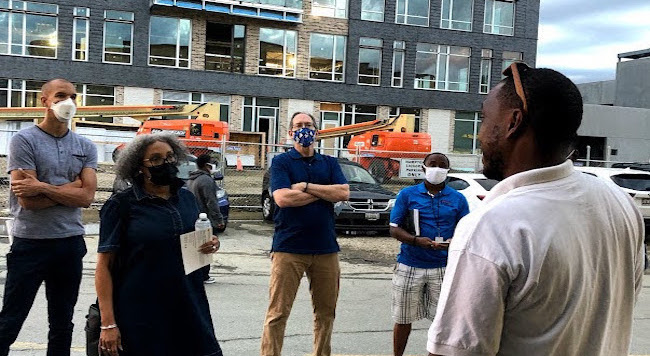
On December 13, 2021, we launched our RISE Prince George’s election platform to educate candidates and the public about how to build a better Prince George’s. We will be working with constituents and allies to reaching out to candidates targeted County Council and General Assembly races to build support with our future elected officials to build a more sustainable, prosperous and inclusive County.
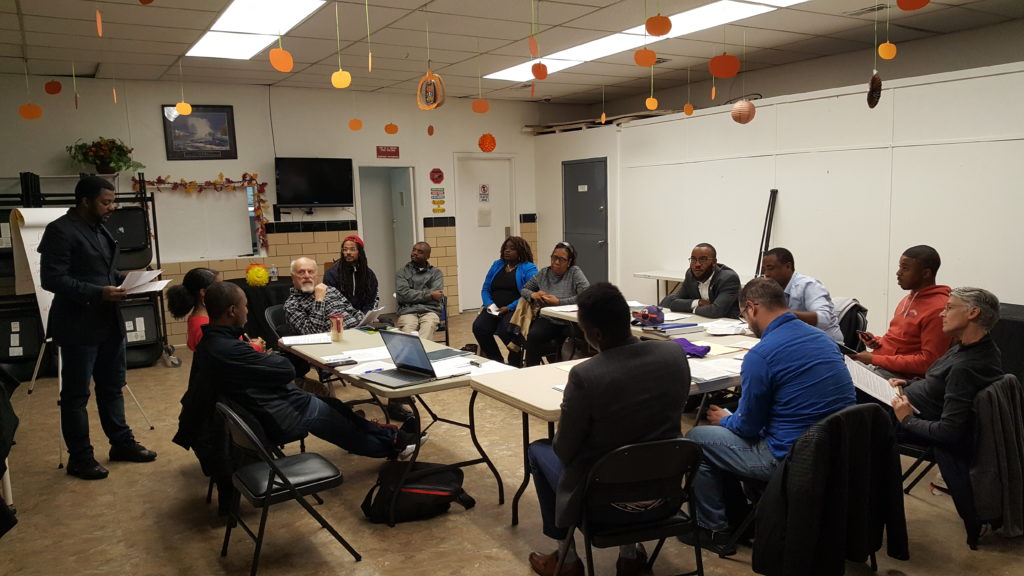
Mission Statement: RISE Prince George’s is a group of County residents and allies advocating for policies and practices that build shared, sustainable prosperity in Prince George’s County by creating safe, walkable, inclusive and transit-oriented communities.
Vision: We seek to build a prosperous, equitable and sustainable future Prince George’s that contains:
- Multiple thriving transit-focused downtowns (North, Central, and Southern parts of the County)
- Inclusive, safe, and connected neighborhoods and municipalities
- Preserved open spaces and natural areas
Assumptions: With 15 Metro stations, another 11 Purple Line stations on the way, and 8 MARC stations, the County’s transit assets are THE competitive advantage – for promoting future job growth, local economic development, and generating needed increases in the County’s tax base. Prince George’s also has the benefit of planning for a future which currently forecasts increased job growth, demand to live near transit, and the need for more homes near jobs and transit.
Objective: Through developing a strategy for shared prosperity and equitable development that is generated from and advocated by and for Prince Georgians (and their allies), we can create a virtuous cycle of economic growth which retains homegrown talent and businesses, attracts new investment, and improves both people and places – especially those historically excluded from wealth and opportunity.
Equitable economic development through transit-oriented development (TOD) will create the base of public and private resources that are necessary to support high-performing schools, community-oriented public safety services, increasing the amount of high-quality housing for people of all incomes close to jobs and essential services, as well as better employment, entrepreneurship, retail amenities, and wealth-building opportunities for all County residents.
How RISE Prince George’s will accomplish its vision: We will work with our members to educate, engage and mobilize for a policy agenda that reshapes policy and budget priorities to build on the County’s assets – transit, established communities, and the kinds of anchor institutions which drive job creation and economic growth.
We meet regularly (every 4-6 weeks), host programming (both virtual and, eventually, in-person) to educate/engage our members, and, in turn, formulate action plans for specific policy change campaigns.
Summary of potential long-term policy agenda:
- Win equitable placemaking and transit-oriented development projects that begin to demonstrate what an inclusive walkable urban and smart growth future in Prince George’s could look like
- Win land use and housing policy changes to sustainably grow the economy, livability, community benefits and equity of opportunity among residents
- Win key transportation investments and policies to greatly improve the quality, safety, affordability and reliability of public transportation and access to daily needs, especially for low income people and communities
We embrace the Prince George’s Rising proposed county-wide Alliance for Equity and Prosperity, and see our group contributing to it, specifically focused on the TOD organizing strategy for equity.