Category: Transportation

Why Tolls Will Be Waived On One Virginia Highway This Weekend

Nearly five months after opening, the operators of the 495 Express Lanes are struggling to attract motorists to their congestion-free toll road in a region mired in some of the worst traffic congestion in the country.

Transurban, the construction conglomerate that put up $1.5 billion to build the 14-mile, EZ Pass-only corridor on the Beltway between the I-95 interchange and Dulles Toll Road, will let motorists use the highway free this weekend in a bid to win more converts.

“It takes a lot of time for drivers in the area to adapt to new driving behaviors. A lot of us are kind of stuck on autopilot on our commutes. That trend might continue for a while, too,” said Transurban spokesman Michael McGurk.

Light use of HOT lanes raises questions

McGurk says some drivers are confused about the new highway’s many entry and exit points. Opening the Express Lanes for free rides this weekend will let motorists familiarize themselves with the road, he said.

After opening in mid-November, the 495 Express Lanes lost money during its first six weeks in business. Operating costs exceeded toll revenues, but Transurban was not expecting to turn an immediate profit. In the long term, however, company officials have conceded they are not guaranteed to make money on their investment. Transurban’s next quarterly report is due at the end of April.

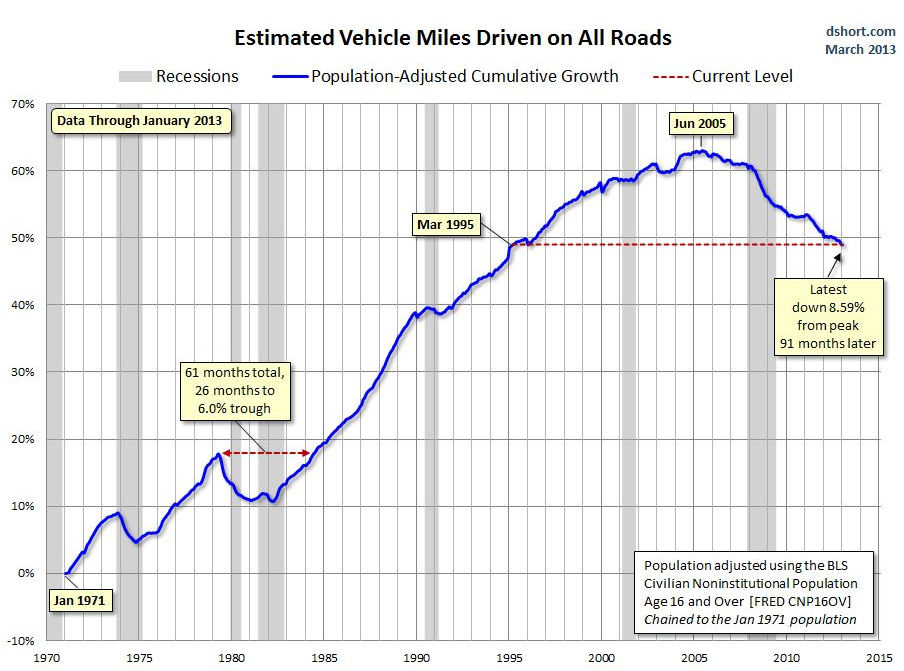
To opponents of the project, five months of relatively light traffic on Virginia’s new $2 billion road is enough to draw judgments. Vehicle miles traveled (VMT) has not recovered since the recession knocked millions out of work and more commuters are seeking alternatives to the automobile, according to Stewart Schwartz, the executive director of the Coalition for Smarter Growth.

“They miscalculated peoples’ time value of money. They overestimated the potential demand for this road,” said Schwartz, who said the light use of the 495 Express Lanes should serve as a warning.

“We should not have rushed into signing a deal for hot lanes for the 95 corridor, and we certainly shouldn’t rush into any deal on I-66,” he said.

Transurban is counseling patience.

“We’re still in a ramp-up period. You’ve probably heard us say that since the beginning, too, but with a facility like this it’s a minimum six months to two years until the region falls into a regular pattern on how they’re going to use this facility,” McGurk said.

In its first six weeks of operations toll revenues climbed on the 495 Express Lanes from daily averages of $12,000 in the first week to $24,000 in the week prior to Christmas. Traffic in the same period increased from an average of 15,000 daily trips to 24,000, according to company records. Despite the increases, operating expenses still outstripped revenues.

It is possible that traffic is not bad enough outside of the morning and afternoon rush hours to push motorists over to the EZ Pass lanes on 495.

“It may also show that it takes only a minor intervention to remove enough cars from the main lanes to let them flow better,” said Schwartz, who said the 14-mile corridor is simply pushing the bottleneck further up the road.

Even Transurban’s McGurk says many customers who have been surveyed complain that once they reach the Express Lanes’ northern terminus at Rt. 267 (Dulles Toll Road), the same terrible traffic awaits them approaching the American Legion Bridge.

Express Lanes a litmus test for larger issues

The success or failure of the 495 Express Lanes will raise one of the region’s most pressing questions as it looks to a future of job and population growth: how best to move people and goods efficiently. Skeptics of highway expansions, even new facilities that charge tolls as a form of congestion pricing, say expanding transit is cheaper and more effective.

“An approach that gives people more options and reduces driving demand through transit and transit-oriented development may be the better long-term solution. But we’ve never had these DOTs give us a fair comparison between a transit-oriented investment future for our region and one where they create this massive network of HOT lanes,” said Schartz, who said a 2010 study by the Metropolitan Washington Council of Governments pegged the cost of a tolled network of 1,650-lane miles of regional highways at $50 billion.

Transportation experts say a form of congestion pricing, either tolled lanes or a vehicle miles traveled tax, may be part of a regional solution to congestion. The public, however, needs to be explained why.

“As long as the majority of system remains non-tolled and congested then you are not going to solve the problem,” said Joshua Schank, the president of the Eno Center for Transportation, a D.C.-based think tank.

“Highways in this region are drastically underpriced. People are not paying enough to maintain them and they certainly are not paying enough to pay for the cost of congestion. The American people have been sold a bill of goods because they have been told that roads are free. Roads cost money,” he added.

The 495 Express Lanes are dynamically-priced, meaning the tolls increase with demand for the lanes. The average toll per trip in the highway’s first six weeks of operations was $1.07, according to Transurban records. As motorists enter the lanes they see signs displaying how much it will cost to travel to certain exits, but no travel time estimates are displayed. “It is important to be very clear to drivers about the benefit of taking those new lanes, and I am not sure that has happened so far,” said Schank, who said it is too early to conclude if the Express Lanes are working as designed.

“It’s hard to know if it works by looking whether the lanes are making money. I don’t know if that is the right metric. It’s the right metric for Transurban, but it’s not necessarily the right metric from a public sector perspective,” he said. “The real metric is to what extent does it improve economic development and regional accessibility, and that’s a much harder analysis that takes some real research and time.”

Photo courtesy of Transportation Nation

Read the original article here >>

Transit Advocates Pushing For Support In Bus Rapid Transit Debate

Transit advocates are going on the offensive after the Montgomery County Planning Board expressed some reluctance toward the idea of wiping out a lane of regular Rockville Pike traffic for Bus Rapid Transit-exclusive lanes.

That idea, presented in Planning Staff’s Draft Countywide Transit Corridors Functional Master Plan a few weeks ago, almost immediately drew skepticism from residents and Planning Board members.

The D.C. based Coalition for Smarter Growth sent an email to supporters on Thursday asking people in favor of the BRT-dedicated lane to email Planning Board members ahead of next week’s second meeting on the Draft, set for Thursday, April 4.

In it, CSG asks “Will we continue to place cars above all else in the decisions we make, or will we begin to make a shift towards providing better options for people than sitting in traffic?”

Montgomery’s proposed Rapid Transit System can transform travel in our county, but there are a number of potential hurdles. This week we are approaching one of those hurdles and we need your voice.

A key part of the Rapid Transit System’s recipe for traffic relief is giving priority to rapid transit vehicles over cars where it’s the most efficient use of our roads. It’s also a principle that has been part of Montgomery’s general plan since 1993. But in hearings last week, some members of the Planning Board appeared to waver in their commitment to this key principle.

As the hearings pick up again, we need to make sure that Montgomery residents are voicing their support for lane priority so that we don’t end up with a watered-down system that makes no impact on reducing traffic.

County staff are hard at work calculating which roads would be the best fit for a high-quality, reliable Rapid Transit System to connect our communities and complement Metro and the coming Purple Line.

Priority lanes for transit aren’t a new idea. 20 years ago, the 1993 Master Plan’s transportation section stated we should “Give priority to establishing exclusive travelways for transit and high occupancy vehicles serving the Urban Ring and Corridor.”

Communities committed to prioritizing transit, like Arlington, Bethesda, and many others have seen success in relieving traffics, providing better options for people to get around, and improving quality of life.  But last week’s Planning Board discussions indicate that they may be wavering on that fundamental point, and that they may need some convincing that prioritizing transit where it’s most efficient is the right decision for the county.

Without a commitment to that concept, building a high quality Rapid Transit System could be very difficult. The debate really comes down to this: How will we share the road?  Will we continue to place cars above all else in the decisions we make, or will we begin to make a shift towards providing better options for people than sitting in traffic?

Many are against the proposal to make three-lane northbound and southbound Rockville Pike from the Beltway to the D.C. line into two lanes of regular traffic with a lane that would be dedicated exclusively to the BRT system, perhaps with stations and boarding areas in the median.

Residents have complained that the BRT system won’t be convenient enough for them to use for non-commuting purposes and that ridership would not offset the traffic impacts of reducing three lanes of already clogged traffic to two.

The Planning Board sent Planning Staff back to the drawing board in order to find new language for the Draft that would put drivers at ease.

“To me, this document screams that we don’t care what happens to drivers and I’m not comfortable taking that position,” Planning Board Chair Francoise Carrier told lead Planning Staff member Larry Cole during the first worksession on March 18.

Read the original article here >>

Activists say transit priority essential to traffic relief

As Montgomery County planners tweak wording in a draft transit master plan, some activists say prioritizing the 10 corridors and 79 miles of proposed future bus rapid transit is essential to easing traffic gridlock.

The county’s planning board on March 18 rejected the first draft of the Countywide Transit Corridors Functional Master Plan, sending it back to the staff to soften language and explain why the plan recommends giving transit priority over cars and drivers.

The planning board is scheduled to discuss the updated draft at 9 a.m. April 4.

Action Committee for Transit President Tina Slater expressed disappointment that debate over transit priority has delayed the plan’s progress, even if only for a few weeks.

Unlike the county’s Ride On bus system, which is mired in the same traffic that gridlocks cars, BRT will give residents an option they never have had before by moving riders more rapidly in dedicated lanes, she said.

The population of Montgomery is expected to increase by 205,759 people by 2040, according to a Montgomery County Demographic and Travel Forecast, based on a 2012 Metropolitan Washington Council of Government report. Slater questioned how even more residents will get around if the county does not prioritize transit.

“We are going to have a major transportation problem on our hands if we don’t do something now,” she said.

Stewart Schwartz, executive director of the Coalition for Smarter Growth, saw the planning board’s delay as doing its homework to ensure the right routes and dedicated service are recommended.

However, Schwartz said his organization feels there are more corridors poised for dedicated lane service than the staff recommended.

During the discussion on March 18, Planning Commission Chairwoman Francoise M. Carrier said she quarreled with the plan’s “categorical statements that transit gets priority all the time everywhere.”

Carrier argued that any priority should be expressed in more nuanced language.

Acting Planning Director Rose Krasnow said that under the existing procedure, roads get priority, all the time, everywhere, which has greatly harmed the quality of life.

Planning Board Commissioner Casey Anderson cautioned watering down the language.

If the board were discussing a rail line, it would not debate whether it was fair to give it priority over other traffic, he said.

But both the problem and advantage of BRT is that it can operate in a myriad of ways — dedicated lanes, dedicated right-of-way, mixed in traffic, etc. — depending on where it is built.

“And that’s great because it’s very flexible,” Anderson said. “The problem is, whatever is in this plan then gets negotiated down from there. And so this is the high-water mark. If you don’t put it in the plan now, it’s not going to get better for transit, it’s only going to degrade.”

Dedicated lanes, signal priority and queue jumping are proven approaches to bus transit and are being implemented in Montgomery by the Washington Metropolitan Area Transit Authority with its MetroExtra limited stop bus service, Schwartz said.

About 700 people ride MetroExtra every day on its route on New Hampshire Avenue, and more routes are planned.

“There’s no better option to manage growth in traffic while maintaining economic competitiveness than investing in dedicated lane transit and transit-oriented communities,” Schwartz said.

Historically, the county approach to traffic congestion was to widen roads.

Yet, many routes proposed in the draft transit master plan cannot be widened, Slater said.

“The only thing you are left to do if the road is as wide as it is today, and you are trying to stuff more people down it, is to put people on something that can move more people than a car,” she said.

But to give BRT dedicated lanes north of the Beltway only to let it snarl in the urban traffic for fear that taking a lane could worsen congestion for the cars would defeat BRT’s purpose, she said.

Once built as planned, BRT will be its own advertisement, Slater said.

Drivers sitting in traffic who see buses bypassing the gridlock will consider taking a bus to get to their destination more quickly, she said.

Reduced from the 160-mile network of 20 corridors recommended last May by the Transit Task Force, planning staff have proposed a 79-mile network of 10 corridors, including U.S. 355 north and south, Georgia Avenue north and south, U.S. 29, Veirs Mill Road, Randolph Road, New Hampshire Avenue, University Boulevard and the North Bethesda Transitway.

Read the original article here >>

Arlington is Booming, And Traffic Fantastically Remains at 1970s Levels

Science fiction fans will recognize this plot line. A woman travels into the past, telling her ancestors about her reality in the future, only to be called a lunatic because of the incredible nature of what she is saying.

Anyone who lives and works in 2013 Arlington, Virginia might be met with the same reaction if she were to go back to 1979 and tell someone about the county’s population, employment, and transportation trends.

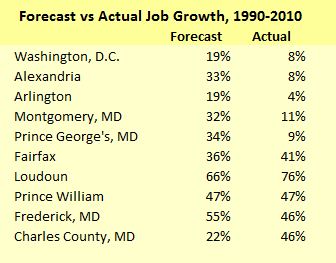
Arlington’s population and employment have jumped nearly 40 percent over the past three decades. Meanwhile, traffic on major arterials like Wilson and Arlington Boulevards has increased at a much lower rate or even declined.

Nevertheless, according to our latest research (also embedded below), most executives and business managers based in Arlington County think it’s a fantastical notion that the county will meet its goal of capping rush-hour traffic at 2005 levels over the next two decades.

Of course, first these leaders had to learn that Arlington even has this target. Only 11 percent surveyed knew that the county actually intends to keep rush-hour trips and rush-hour vehicle-miles-traveled (VMT) at or below 5 percent growth of their respective 2005 levels by 2030 (PDF; 1 MB). This goal is in place even though Arlington County planners expect that the population will rise by 19 percent and jobs will increase by 42 percent over that same period.

Once business leaders heard about the cap, a majority (61 percent) agreed that keeping traffic near 2005 levels is important to achieve. However, given the growth projections, it’s not surprising that so many in our business community do not think that we can get to our goal. It may be worth reminding them that other jurisdictions have more aggressive targets. San José, California, for one, wants to reduce the VMT within its borders by 40 percent from its 2009 level by 2040.

Arlington County Commuter Services continues to refine the way in which the county government keeps a lid on traffic with the infrastructure already in place. In 2012, ACCS’s outreach work throughout the county shifted 45,000 car trips each work day from a solo-driven car to some other form of transportation. The Silver Line’s opening at the end of the year will give new options for the large numbers of Fairfax County residents who travel into Arlington or through it to Washington D.C.

Yet now is also a time in which many of our region’s transportation visionaries and transit providers are thinking big about the future. The Coalition for Smarter Growth just released a report that catalogues the many existing plans to improve transit across the region in order to get us Thinking Big, Planning Smart, and Metro’s Momentum plan for improvements by 2040 is a expression of what the heart of our region’s transportation success could look like for the next generation.

Clearly, the billions of dollars needed to make these and other investments possible will not appear out of thin air and, as a community, the D.C. region will need to make bold decisions (just as Arlington has by strictly following its transportation vision set out in the 1970s).

Luckily, Arlington’s business community seems to be on board. Seventy-nine percent think that improving the transit system is important. And Arlington’s track record of success and the attitudes found in our survey of business leaders indicate that meeting the county’s traffic goal is realistic after all.

Does your community have an explicit goal to cap traffic? If so, we would like to hear about it, because seeing the state of practice helps us all make the case that taming traffic is, in fact, possible. Just like in science fiction, it only seems crazy because we have not done it yet.

Photo courtesy of Mobility Lab

Read the original article here >>

Helping Virginia grow — wisely

The March 13 editorial “Leave well enough alone,” on the Virginia transportation bill, characterized the coalition that defeated the 2002 referendum on a sales tax for transportation as “anti-growth activists and anti-tax conservatives.” This is a false characterization.

The leading activists have consistently supported planning for robust growth in the region. During the referendum debate, the Coalition for Smarter Growth and the Piedmont Environmental Council released a plan for redevelopment and economic growth that focused on the areas around the region’s rail stations. The region has embraced this vision through its Region Forward plan and local implementation of new transit-oriented development projects.

In Fairfax County, business and political leaders recognize transit-oriented development as the pivot for continued economic growth. The Coalition for Smarter Growth has endorsed and supported millions of square feet of development and thousands of housing units that bolster a smart-growth future. The Post should recognize this.

Douglas Stewart, Fairfax

The writer is a grants specialist at the Piedmont Environmental Council.

Read the original article here >>

Manassas battlefield must be protected from traffic

Regarding Robert McCartney’s March 7 Metro column “Deal is near to shift traffic out of Manassas battlefield park”:

Everyone involved agrees on the need to direct commuter traffic away from the national battlefield park to protect the park’s history, meaning and visitors. However, not everyone agrees that the proposed new highways can solve traffic problems.

Omitted from Mr. McCartney’s column was the Virginia Department of Transportation’s agreement to analyze a package of practical, lower-impact transportation projects that could provide relief for east-west commuters and the park. That analysis must be completed and considered before this process moves forward. The draft agreement does not yet provide specific, enforceable provisions to close Route 29 and Route 234 inside the park if the new highways are built.

The ghosts of Manassas’s fallen soldiers deserve better. To move forward without an ironclad guarantee that the roads will be closed would put the history and culture of Virginia’s most recognized battlefield in jeopardy.

Joy M. Oakes, Washington

The writer is senior regional director of the National Parks Conservation Association.

Read the original article here >>

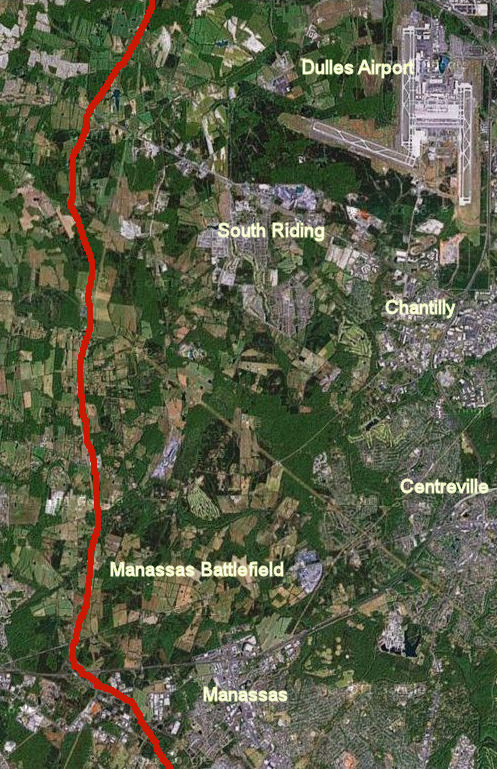
VDOT’s Outer Beltway

VDOT’s Outer Beltway

VDOT’s OUTER BELTWAY
Community Meeting

Monday, March 11
7:00 – 9:00 PM
Chantilly Regional Library
4000 Stringfellow Rd – Chantilly (map) – served by Fairfax Connector bus rt. 605
Come early to view maps & displays

Resources

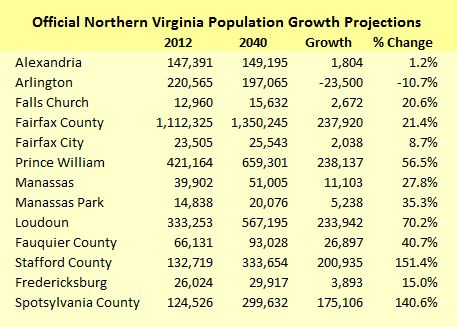
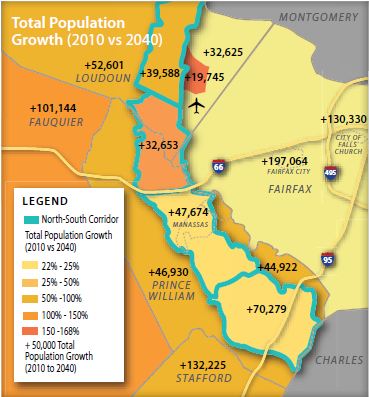
At the meeting, we discussed how the Outer Beltway would affect traffic in the region, the impacts on our property and communities, how much new land the project would open to new development, and how many new commuters we can expect on I-66, Route 50, and other major routes

D.C.-region smart-growth organization releases transit report

Earlier this week, the Coalition for Smarter Growth issued a report on the Washington, D.C. region’s public transportation, including a set of nine principles to guide long-term regional planning for the next generation of transit. The Coalition for Smarter Growth, a non-profit, works to promote smart growth in the Washington, D.C. region.

For those living or working in Washington, D.C., Maryland or Virginia who ever tried to travel to one of the three major area airports, work, or activities and errands without driving a car, they know that Metro serves as a backbone of our regional public transportation network, and they understand that this network includes numerous transit entities that cross local jurisdictional lines.

Relying in part on 2012 and 2013 reports on next-generation transit goals issued by the Metropolitan Washington Council of Governments and Washington Metropolitan Area Transit Authority, respectively, the March 4, 2013 Coalition for Smarter Growth’s primer summarizes plans to grow the Metro system and to expand public transportation.

The report discusses six ongoing transit initiatives: Metrorail’s 23-mile Silver Line extension in Virginia; a new eight-line light-rail and streetcar network throughout D.C.; Metrorail’s Purple Line cross-county connection in Maryland; a new 5-mile streetcar service along a mixed-use corridor in Arlington and Fairfax Virginia; three rapid bus transportation corridors in Alexandria and Arlington, Virginia; and a 160-mile rapid bus transportation system in Montgomery County, Maryland.

The report, “Thinking Big Planning Smart,” states that its purpose “is to get you involved in creating a vision and plan for the new public transportation investments we need to link together our region’s ever-growing number of livable, walkable centers and neighborhoods.” The Coalition offers the 35-page report as a primer on the next generation of transit and a resource on already-planned regional transit proposals in progress.

As Aimee Custis, Communication Manager at the Coalition for Smarter Growth, wrote on the popular blog Greater Greater Washington, “[the] report is both a call to action and a baseline resource.”

Photo courtesy of Doug Canter.

Read the original story here >>


Transit, Purple Line Activists Hit Annapolis For Lobby Day

Transit and smart growth activists greeted leaders in Annapolis today with gravestones representing “the impending death” of transportation projects such as the Purple Line if the General Assembly does not come up with transportation funding in this legislative session.

Representatives from D.C.-based Coalition for Smarter Growth, which is spearheading the “Get Maryland Moving” campaign, Purple Line Now and others made the slushy trek to the State House to meet with about 20 legislators and put on the demonstration.

State Transportation officials say without a source for state transportation funding, matching federal dollars for the 16-mile Purple Line light rail that would connect Bethesda with Chevy Chase, Silver Spring and College Park, among other places, would be in jeopardy.

The Maryland Department of Transportation plans to halt design work on the $2.2 billion project if no funding is provided from the current General Assembly.

On Monday, Gov. Martin O’Malley (D), House Speaker Michael Busch (D) and Senate President Thomas V. Mike Miller (D) announced their plan for a new tax on gas wholesalers that is projected to mean a 2-cent hike in gas prices this July and another 7-cent hike next July. The plan is projected to bring in $3.4 billion over the next five years, which likely would not be able to fund for the Purple Line and the Red Line light rail project in Baltimore simultaneously.

“In spite of the weather, we couldn’t have chosen a better time to come to Annapolis. We’re thrilled to finally see unified action and leadership from Governor O’Malley, Speaker Busch, and President Miller, and will do all we can as residents to organize for a statewide solution that invests in real transportation solutions for all Marylanders”, said Robbyn Lewis, founder of the Red Line Now PAC, in a prepared statement.

According to polls, a clear majority of Marylanders are against any raise in gas prices. Republicans against the proposal have argued the transit projects the funds will help support do not benefit rural areas of the state.

Rendering via Maryland Transit Administration

Read the original article here >>

Deal is near to shift traffic out of Manassas battlefield park

The National Park Service and Virginia authorities are close to signing a major Civil War battlefield preservation deal that eventually would close two congested roads that slice through the twice-hallowed ground at Manassas.

The agreement, which could be signed by the summer, would provide for routes 234 and 29 to be shut down inside Manassas National Battlefield Park. That would happen once new highways are built along the western and northern edges of the battlefield and serve as bypasses.

“We’re down to the wire here. It looks good,” said Ed Clark, the park superintendent, a key architect of the pact. “It puts the goal of removing all the traffic from the battlefield within sight.”

There are downsides, of course. It could be more than 20 years before both highways, sometimes called the Bi-County Parkway and the Battlefield Bypass, are completed.Local residents and environmental groups said they would destroy the rural character that drew them to western Prince William County. Some accuse the Park Service, which previously has resisted new roads and development, of selling them out.

On the bright side, however, shutting the roads inside the park would be one of the biggest achievements ever to restore the authenticity and improve the visitors’ experience at the premier Civil War battlefield closest to Washington.

The 1861 Battle of Manassas, known in the North as Bull Run, was the war’s first full-scale engagement. It’s the one where Washington’s elite naively took carriages 30 miles to the scene for a picnic, thinking war was a spectator sport.

They were shocked when the Rebels routed the Union troops and sent them scampering back to the capital.

The same ground was the site of a second battle a year later, even bloodier than the first. It marked one of Confederate Gen. Robert E. Lee’s greatest victories and helped encourage him to invade Maryland, where he was turned back at the historic battle at Antietam.

The Park Service and preservationists have long been unhappy principally with the steadily rising traffic inside the battlefield. On a typical workday, more than 50,000 vehicles pass through the intersection of 234 and 29 in the center of the park.

Congestion is so bad that it’s often impossible to complete the driving tour that traces the highlights of Second Manassas.

“What we’ve been saying for more than a decade is the biggest threat to this park is the commuter and industrial traffic that goes through it every day,” said Jim Campi, spokesman for the Civil War Trust.

Campi’s group hasn’t yet formally endorsed the deal, known as a Section 106 programmatic agreement under federal historic preservation law. His group wants to be sure the final form guarantees that both roads, and not just one, will eventually be closed. That’s important because plans provide for the closures to be in two phases.

In the first phase, when the north-south, Bi-County Parkway is completed west of the park, 234 would be closed inside it. State and local authorities are keen to push that ahead quickly. Local residents who stand to lose property, and other groups, are agitating to block it.

The park would have to give up four acres of land for the Bi-County Parkway and allow a noisy, four-lane highway to be built nearby. Clark, the park superintendent, doesn’t like that but says it would be worth it to eliminate a road that’s also pretty noisy and cuts right through his battlefield.

“We’re giving some on the periphery to get an awful lot in the core, in the center of the park,” Clark said.

In the second phase, possibly as late as 2035, the Battlefield Bypass would be built north of the park. Only then would 29 be closed within it.

Clark said that as part of the deal, he insisted that the Virginia Department of Transportation pledge firmly to close both roads once the new highways are built. His nightmare would be that he agrees to new highways just outside his park, only to see the state renege on its promise to shut the roads within.

“They would have to double-cross us to do that,” Clark said. “We have to operate in good faith here that they’re going to stick to their word.”

Read the original article here >>