Author: Cheryl Cort

Testimony: Support upzoning Wisconsin Ave. Metro corridor (DC)

Testimony: Support upzoning Wisconsin Ave. Metro corridor (DC)

CSC’s July 23, 2026 letter in support for Office of Planning’s Supplemental Report III recommendations, DC Zoning Case No. 25-13

July 23, 2026

Mr. Anthony Hood, Chairman, Zoning Commission of the District of Columbia

441 4th Street, NW, Suite 210S, Washington, DC 20001

RE: Support for Office of Planning’s Supplemental Report III recommendations 

In Zoning Case No. 25-13 — Proposed Zoning Text and Map Amendments to create and map – new Wisconsin Avenue Mixed Use zones for Friendship Heights and Tenleytown Metro station areas

Dear Chair Hood and Members of the Zoning Commission:

Please accept this testimony on behalf of the Coalition for Smarter Growth. We are a nonprofit organization advocating for walkable, bikeable, inclusive, transit-oriented communities as the most sustainable and equitable way for the Washington, DC region to grow and provide opportunities for all.

We wish to express our support for the recommendations in the Office of Planning’s Supplemental Report III. The data and analysis provided by OP provide a sound rationale for the recommendations for the three questions examined at the request the Zoning Commission. 

We have advocated for strengthening the form-based approach to zoning, rather than relying on a discretionary Design Review process. A Design Review process discourages new development due to the added risk of delay and uncertainty associated with a contested case. If the Zoning Commission plans to move forward with the use of Design Review for the new Friendship Heights and Tenleytown Metro zones, we support OP’s recommendations, which offer a more appropriate way to encourage quality redevelopment. 

Specifically, we support:

  1. Large lots of 15,000 SF and above in the Friendship Heights and Tenleytown Metro zones will be subject to Design Review by the Zoning Commission. Below 15,000 SF lot size, projects should be reviewed as matter of right projects. These smaller projects would still be reviewed for compliance with the zones’ urban design requirements, but not as a contested case. This approach is consistent with guidance of the Wisconsin Avenue Development Framework. OP’s rationale in the Supplemental Report III offers a detailed analysis of lot sizes and potential impacts. We concur with OP’s conclusion that 15,000 SF for lots in the two new Metro zones is an appropriate threshold for Design Review, if the Zoning Commission chooses to apply a Design Review requirement.
  2. Affordable housing projects are exempt, if they meet high affordability levels — 33% affordable for very low and extremely low income households, and are affordable for the life of the building. We support this exemption because affordable housing projects are far more sensitive, and less tolerant of the uncertainties created in the development review process. If we are serious about bringing more affordable housing to high opportunity neighborhoods like these ones – where little exists – we must do more to remove barriers. This exemption is a helpful step to lower barriers in the development review process. 
  3. Historic properties can be reviewed by the Historic Preservation Review Board (HPRB), and do not need a separate Design Review at the Zoning Commission. Appropriate design review can be provided by HPRB, since the project would already be subject to review at HPRB, and subject to the requirements of the zone that the project occurs in. A second review by the Zoning Commission would be largely duplicative. 

These recommendations will help advance increased housing, and affordable housing options in this high-opportunity Metro corridor. This rezoning helps implement the Wisconsin Avenue Development Framework and offers the potential for thousands of new homes, and the benefit that comes with that — attracting new shops, restaurants, and services around two Metro stations in Friendship Heights and Tenleytown, and the Wisconsin Avenue transit corridor. This significant upzoning advances the District’s goals to create more housing, and more affordable housing, especially in high opportunity and transit-accessible areas. 

Thank you for your consideration.

Sincerely,

Cheryl Cort

DC and Prince George’s Policy Director
Event materials: How innovative zoning can make DC a more livable and equitable city

Event materials: How innovative zoning can make DC a more livable and equitable city

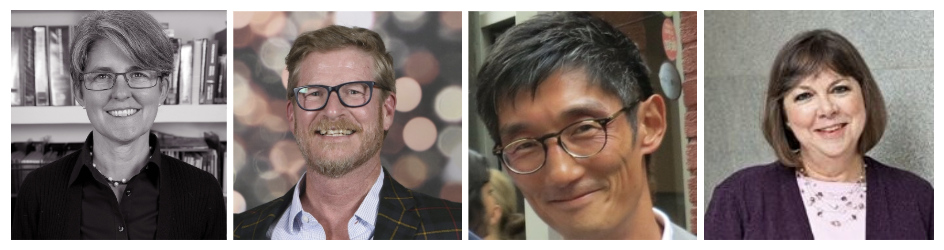
Pictured from left to right: Lisa Wise, Randy Hutcheson, Peter Park, Ellen McCarthy

This July 15, 2026 online event explored how a design-based approach to zoning can be used to increase housing opportunities and support the graceful evolution of neighborhoods across the city. Learn from the discussion with national thought leaders and practitioners as we explore how the DC 2050 Comprehensive Plan and Future Land Use Map can set the foundation for zoning reform. DC 2050 is the city’s updated comprehensive plan to guide growth over the next 25 years.

Featured speakers:

Lisa Wise, CEO and Principal, Lisa Wise Consulting; Lisa has over 30 years of experience in code audits and updates, long-range planning, housing policy, and land use economics, including working on code updates for Austin, Texas; Columbus, Ohio; and San Francisco, California.  

Randy Hutcheson, former Planning Manager at the City of Fort Worth, Texas; Randy has over 25 years of experience in writing, reviewing, and administering design-based codes, including overseeing downtown design, historic preservation, municipal code review.

Peter Park, former Planning Director, cities of Milwaukee and Denver; Peter has overseen preparation of numerous plans, comprehensive zoning code updates, and implementation of major infrastructure and development projects. He has over 25 years of, including special expertise in zoning code reform, transit-oriented development, and urban highway removal.

Ellen McCarthy, former DC Planning Director; adjunct professor, Georgetown University Urban and Regional Planning program.

Moderated by Marta Goldsmith, Ward3Vision Steering Committee

Presentations and Resources

Support for the B26-0684 – Autonomous Vehicle Deployment Authorization Amendment Act of 2026 (DC)

Support for the B26-0684 – Autonomous Vehicle Deployment Authorization Amendment Act of 2026 (DC)

July 2, 2026

The Honorable Charles Allen

Chair, Committee on Transportation and the Environment, Council of the District of Columbia

1350 Pennsylvania Avenue, NW,Washington, DC 20004

Re: Support for the B26-0684 – Autonomous Vehicle Deployment Authorization Amendment Act of 2026 

Chair Allen and Committee Members:

Our organization advocates for walkable, bikeable, inclusive, and transit-oriented communities as the most sustainable and equitable way for the Washington, DC region to grow and provide opportunities for all. We have been working in the District of Columbia for 29 years. 

The Coalition for Smarter Growth (CSG) supports Chair Allen’s bill, B26-0684, in particular its important provisions for: 

  • Reporting operations and safety data, including VMT and zero-passenger miles
  • Vehicle miles traveled tax
  • Supporting public transit 
  • Serving all wards
  • User interface for individuals with disabilities

CSG believes that autonomous vehicles (AVs) have the potential to improve roadway safety and provide an additional transportation option to persons without a car or unable to drive (especially in areas with limited transit options), and that AVs also have the potential to degrade our cities and towns by adding more traffic, car dependency, and control of public streets and curbspace by unaccountable private companies. Council Member Allen’s bill seeks to address these issues.

The District of Columbia must manage AVs to support adopted District policy that prioritizes people over vehicles. 

Specifically, DC’s transportation plan, MoveDC, has these policies: 

  • Policy H: Design and manage public space and the space along the roadway to be people-focused, promoting livability and public health by improving accessibility, sustainability, safety, and placemaking.
  • Policy I: Permit and program social, cultural, commercial, and flexible use of public space to improve the quality of life for current and future residents.
  • Policy Q: Promote partnerships and programs such as travel demand management to achieve 75% non-auto mode commute trips by 2032.
  • Policy R: Adapt policies to ensure equitable service, privacy protections, and data driven decision making as technology and new transportation services arise.

Multiple studies have concluded that unregulated AVs would have major impacts on traffic volumes. 

A recent academic synthesis of 26 studies found that shared AV adoption would increase total city traffic volumes by 5.3%, measured in vehicle miles traveled (VMT). This increase is enough to jam up key intersections and busy urban corridors. A 2020 DC scenario study of AV proliferation in the District of Columbia, likewise found that VMT and congestion would rise significantly without strong policy measures like congestion pricing.

AV legislation must discourage excess traffic, support transit, help travelers with disabilities, and ensure accountability and transparency by AV companies

We ask, in particular, that the following critical provisions of bill B26-0684 be incorporated in a new permitting system for shared or personal autonomous vehicles in the District:

  • Reporting operations and safety data, including VMT and zero-passenger miles
  • Vehicle miles traveled tax
  • Supporting public transit 
  • Serving all wards
  • User interface for individuals with disabilities

Thank you for your consideration. We urge the committee to recommend the bill to the full Council. 

Sincerely,

Cheryl Cort

DC & Prince George’s Policy Director

Event materials: What’s the future vision for how Ward 3 and DC will grow & change?

Event materials: What’s the future vision for how Ward 3 and DC will grow & change?

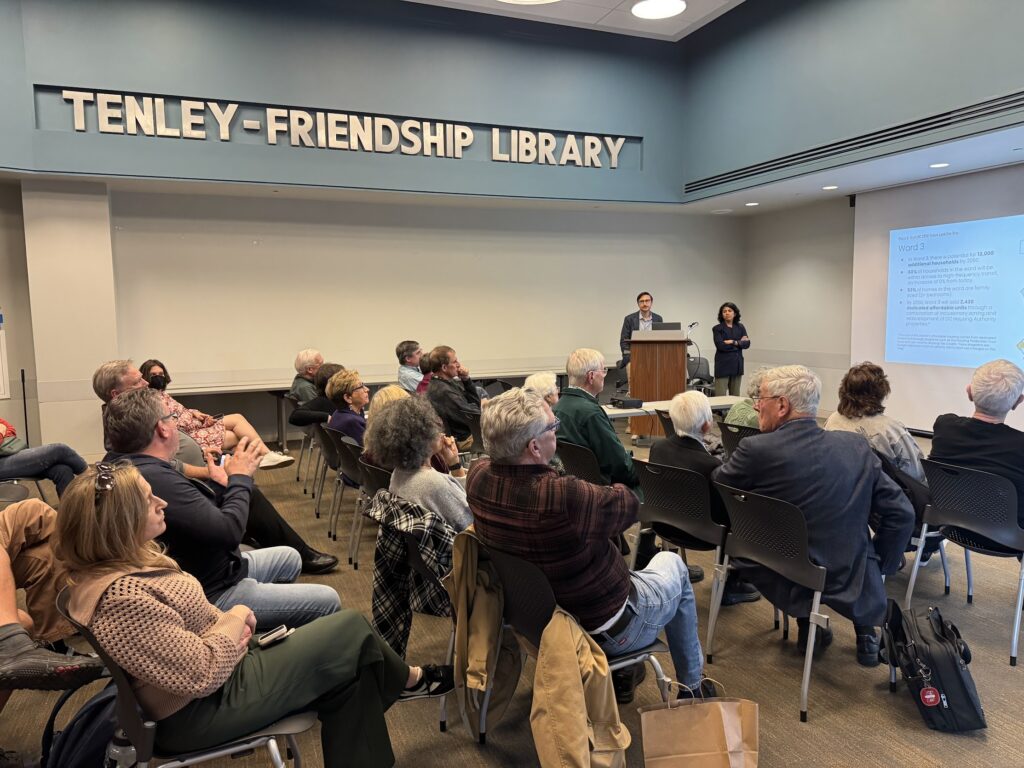
photo by Cheryl Cort

This event was a discussion with DC Office of Planning to learn about DC 2050, District’s next Comprehensive Plan and Future Land Use Map.

April 27, 2026, 6:00 – 7:30 pm, Tenley-Friendship Neighborhood Library

Speakers: Nick Kushner, Senior Cross-Systems Planner, DC Office of Planning

Radhika Mohan, Deputy Director, DC Office of Planning

Ellen McCarthy, Moderator, Ward3Vision

DC Office of Planning staff presented the planning process to date, and discussed proposed changes for the Future Land Use Map. DC 2050 will guide where and how we build new housing, grow job opportunities, and connect neighborhoods. DC 2050 aims to align land use policies and investments to make the District more equitable, affordable, and resilient. See DC 2050.

This event was co-sponsored by CSG, Ward3Vision, and Cleveland Park Smart Growth.

Testimony at DPR oversight hearing in support of Chevy Chase DC library redevelopment with increased affordable housing (DC)

Testimony at DPR oversight hearing in support of Chevy Chase DC library redevelopment with increased affordable housing (DC)

We are pleased to express our support for the capital funds for a new Chevy Chase recreation center, along with a new library, civic and outdoor recreation space, and affordable, mixed-income homes at the Chevy Chase Civic Core site.